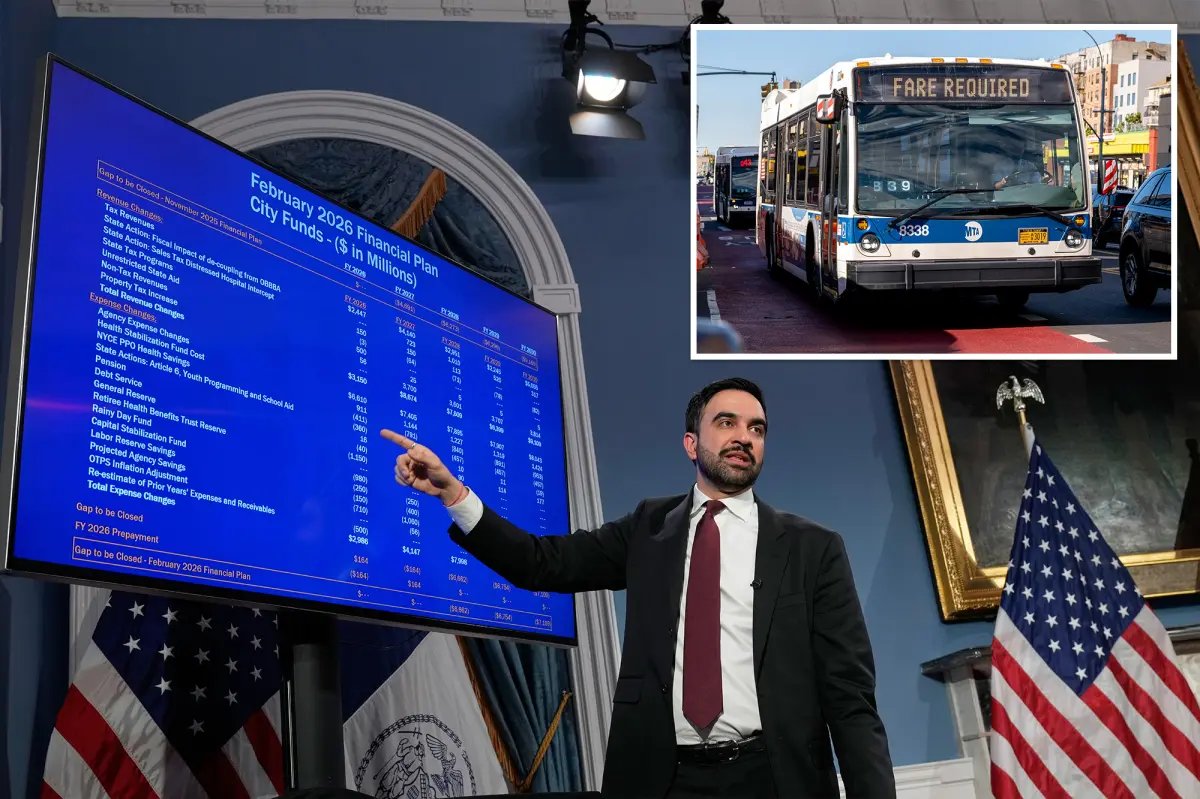


The Mamdani administration has grossly underestimated how much it will owe the Metropolitan Transportation Authority in the mayor’s first budget, even as he pursues a campaign pledge to make city buses free, a budget watchdog said.
New York City will need to pay about $621 million more than the Mamdani administration has penciled in for MTA subsidies in fiscal year 2027, according to the New York City Comptroller’s office, which called out “contributions to MTA” as one of the clearest examples of chronic underbudgeting in the plan.
Still, Mayor Zohran Mamdani has not dropped his pledge to make city buses free, a proposal that could cost roughly $800 million.
“We have to make this a city where working people can get around,” Mamdani said Thursday when asked if he would address underbudgeting for Fair Fares, a program that offers free and reduced fares to low‑income New Yorkers.
“We also have to put forward a budget that not only charts the course of our first year in office, but frankly charts the course amidst the kind of fiscal crisis we haven’t seen here in more than a decade.”
Mamdani’s budget proposal, released Tuesday, held the city’s Fair Fares contribution flat at $96 million in fiscal 2027, drawing criticism from transit advocates.
A mix of state law, legal settlements and formal cost‑sharing agreements requires New York City to underwrite paratransit, school and reduced fares, and certain bus and commuter rail operations, but budgeted amounts can vary.
Mamdani’s preliminary plan overlooks how quickly New York City’s operating support for the MTA has been rising. Independent Budget Office figures show subsidies increasing from about $1.2 billion in fiscal year 2023 to $1.4 billion in 2024. The IBO issued a report last year that said subsidies for 2025 were on pace to exceed that.
The city’s Access‑A‑Ride reimbursement has also jumped from about $250 million in 2023 to $465 million in 2024 after state budget language increased New York City’s share of the cost to as high as 80%. Five months into fiscal year 2025, New York City had already spent $218 million on paratransit, according to the IBO.
Student fare costs are climbing as well. The Department of Education’s lump sum payment to the MTA for Student OMNY cards rose from $45 million to $50.5 million with the rollout of year‑round, 24/7 student tap privileges in the 2024-25 school year and will increase along with fare hikes the MTA instituted in January.
MTA leaders have warned they would sooner raise fares than significantly rein in spending.
The authority’s board last year approved a $21.3 billion operating budget for 2026 that builds in back‑to‑back fare and toll increases of roughly 4% while still projecting deficits later in the decade. At that meeting, an MTA finance committee member cautioned that the plan could mean “even more” hikes if new revenue does not materialize.
The agency is also under scrutiny for record overtime spending and nearly $1 billion a year in fare evasion losses, fueling doubts about its ability to competently self‑fund new mandates like Mamdani’s free bus pledge.
Mamdani must still secure budget approval from the City Council, who have signaled unwillingness to go along with his budget scenario.
New York City’s final spending plan is expected to be adopted in June.
“We have an executive budget and then an adopted budget before the end of June,” Mamdani said. “And I continue to believe deeply in the importance of making public transit more affordable.”
