


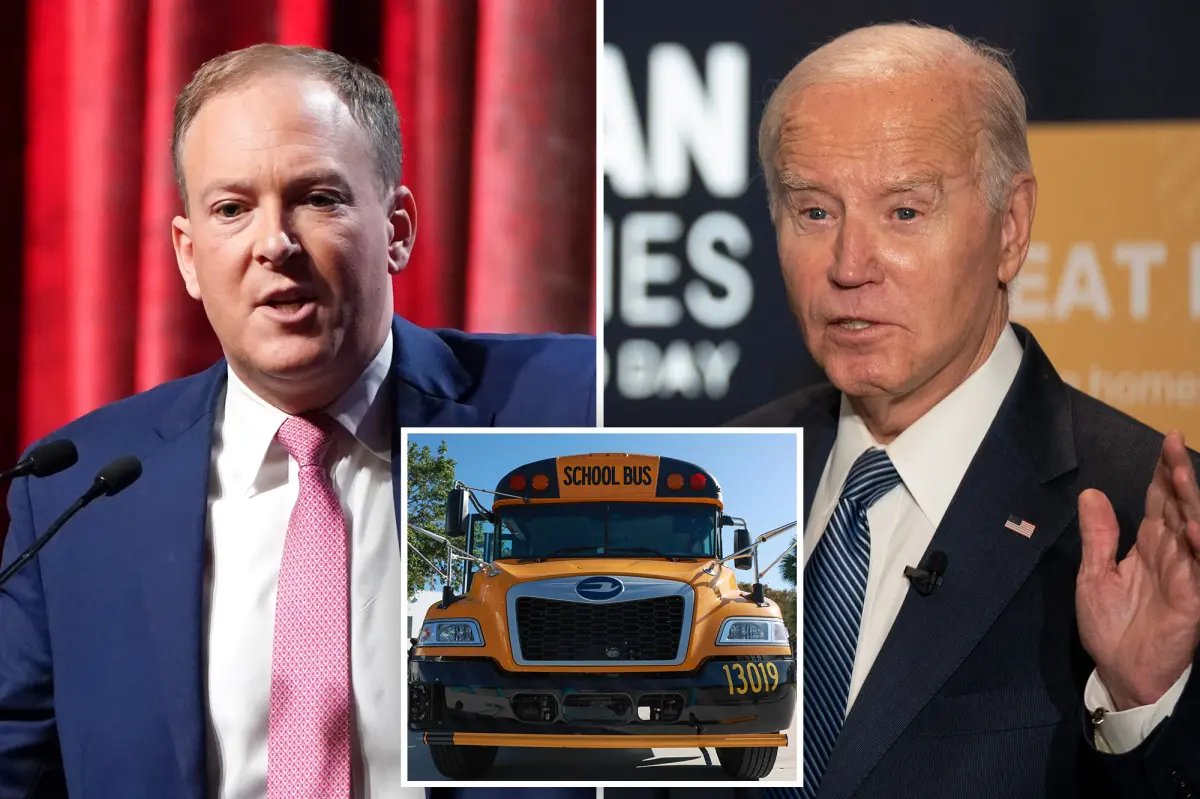

WASHINGTON — The Environmental Protection Agency is seeking to reform an electric school bus program that had $2.3 billion in remaining taxpayer funding by providing an array of fuel alternatives through new grants with leftover cash.
EPA officials will announce Thursday that they’re expecting feedback from school officials, fleet operators, manufacturers and producers on the range of “biofuels, compressed natural gas, liquified natural gas, and hydrogen” that could power buses nationwide with a “more reliable” energy source.
“Today, EPA takes the next step to set the program straight,” EPA Administrator Lee Zeldin said in a statement to The Post. “Americans can rest assured that moving forward, the program will be safe, effective, and use reliable forms of American energy.”
The regulatory process, which will begin with what’s known as a Request for Information (RFI) from all those parties, aims to dole out the billions of dollars in grants for school bus fleets starting in 2026 — while complying with the 2021 authorizing law, passed under former President Joe Biden.
The Clean School Bus Program set aside $5 billion from the Bipartisan Infrastructure Law to replace thousands of gas-guzzling vehicles with zero-emission ones taking American kids to schools.
The Biden-era legislation had permitted rebates for the fuel alternatives in addition to all-electric vehicles, EPA officials noted, and will be able to provide the grants without running afoul of clean-air regulations or laws.
But around 90% of the funding went toward funding all-electric buses, officials said.
The EPA’s watchdog determined in a 2023 audit that the program was rife with “potential fraud, waste, and abuse” — and rescinded $38 million in ineligible rebates requested.
At least one manufacturer, Lion Electric, went bankrupt in 2024 after taking $160 million in taxpayer dollars.
At least $2.7 billion in funding was awarded to 1,152 school districts to make the change to 8,236 electric buses — but dozens were stalled from manufacturing issues, the Washington Free Beacon first reported.
More than $61 million went toward just two entities in New York City making 180 all-electric buses for five school districts, coming out to roughly between $295,000 to nearly $395,000 spent for each one. It’s unclear how many were produced.
Statewide in New York, school districts got $210 million from the program and manufactured just 150 buses, a spokesperson from the New York State Energy Research and Development Authority previously told The Post.
That puts a price tag on the electric bus swap at approximately $318,452.45 per vehicle to produce.
“As was the case with so many of the Biden-era programs, the Clean School Bus program has been a disaster of poor management and wasteful spending of taxpayer dollars,” Zeldin added. “At the Trump EPA, we have zero tolerance for reckless spending.”
Officials and parents of schoolchildren also carped that electric buses failed to sufficiently provide heat for students during the colder winter months, were prone to breaking down on their routes and too costly for many districts millions to switch.
The RFI public comment period will run for 45 days before the process of rolling out new rebates begins.