


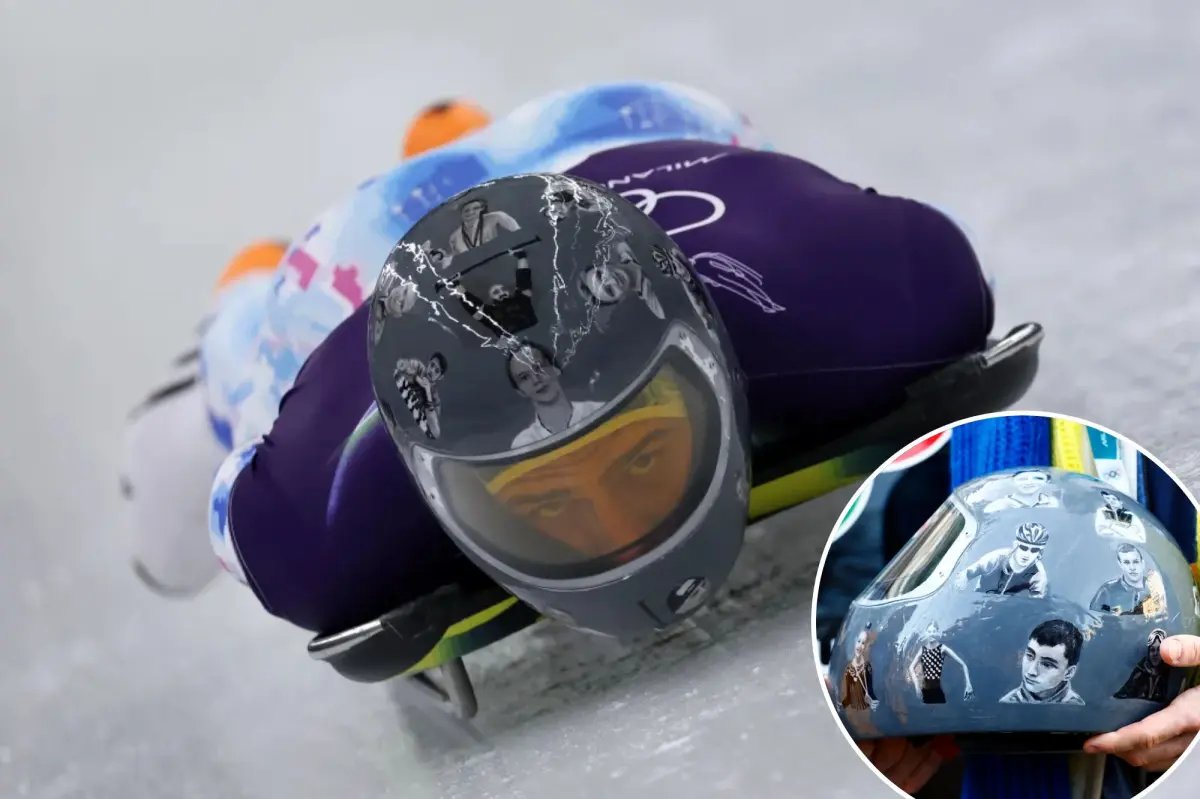
Vladyslav Heraskevych, the Ukrainian skeleton athlete who hoped to wear a helmet depicting images of over 20 athletes and coaches from his home country killed in Ukraine’s war with Russia, had his appeal of disqualification for violating Olympic rules denied on Friday.
It brings to an end Heraskevych’s attempt to compete at the Winter Games in Milan, as the Court of Arbitration for Sport turned down his appeal, ruling it would violate the International Olympic Committee’s rule that states “no kind of demonstration or political, religious or racial propaganda is permitted in any Olympic sites, venues or other areas.”

Heraskevych intended to wear the helmet regardless and while he was offered the option of wearing a black armband instead by the IOC, he turned it down.
Heraskevych wore the helmet during a training run, which started the controversy. Following the appeal hearing, the Ukrainian seemed to accept his fate, saying, “Looks like this train has left.”

2026 WINTER OLYMPICS
The hearing by the CAS was held by a sole arbitrator and the CAS said in statement it found the IOC’s “limitations reasonable and proportionate, considering the other opportunities for athletes to raise awareness in mixed zones, in press conferences, on social networks, or in Mr. Heraskevych’s case, wearing the helmet during four training runs.”
And Heraskevych made clear he didn’t agree with the ruling, having stated previously he and other Ukrainian athletes said they saw Russian flags at events during the Games, even though they are prohibited.
“I think it’s the wrong side of history for the IOC,” Heraskevych said.
To that end, CAS released a statement saying the arbitrator “wished to state that she is fully sympathetic to Mr. Heraskevych’s commemoration and to his attempt to raise awareness for the grief and devastation suffered by the Ukrainian people, and Ukrainian athletes because of the war.”