


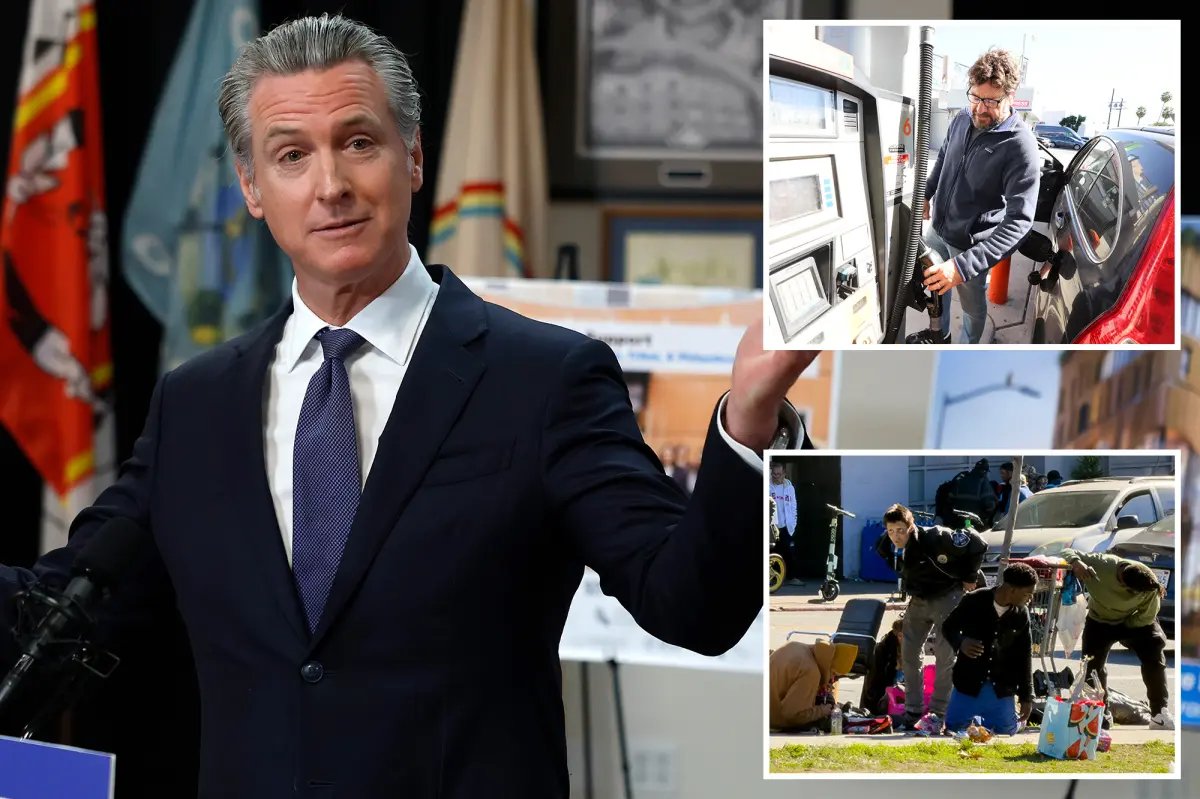

Lawmakers and local officials want to unleash an avalanche of new taxes on Californians in 2026, slugging everyone from big and small business owners to everyday consumers.
The new tax push comes just as gasoline tax increases yet again this summer — with drivers receiving little notification beyond a sneaky mention on an obscure government webpages.
In Sacramento and San Francisco, lawmakers and unions are crafting new taxes to go after landlords with vacant properties and businesses, big and small.
The most controversial proposal is the billionaire’s tax, which has already seen an estimated trillion dollars in wealth fleeing the Golden State.
In Los Angeles, county supervisors seized on Gov. Gavin Newsom and the Legislature’s frequent waiving of a 2% cap on local sales tax to push another half-cent sales tax increase, meaning Angelenos face paying an eyewatering 10.25% every time they arrive at the cash register.
Meanwhile, California’s absurd gas taxes — the highest of any state in America — will be jacked up again in July because lawmakers and former Gov. Jerry Brown signed off on SB 1 in 2017, which locks in excise increases on gasoline and diesel based on the annual rate of inflation.
“The overall picture is one of high taxation and taxes that don’t exist in other states,” Jared Walczak, a senior fellow at the Tax Foundation.
A study by the Tax Foundation found the California ranked only behind Washington D.C. and New York for the highest combined state and local per capita tax at $10,319 per year.
But for California’s lefty lawmakers and the advocates, that’s not enough. They want to be number one.
And a sampling of new taxes on the menu include the AB 1790, or the “water’s-edge” election, a corporate tax change putting more pressure on companies employing millions of Californians.
The proposal means a portion of any income they earn, anywhere in the world, would be subjected to Californian law.
Other proposals include creating new employer penalties tied to workforce metrics, such as how many employees rely on government health coverage, or pay-ratio triggers based on the gap between a CEO and rank-and-file workers.
Dave Kline, spokesperson for the California Taxpayers Association, said a wider variety of taxes are being introduced, particularly at the state level
“It’s not just proposals to increase the sales tax or income tax on everyone – it’s very targeted these days,” he said.
Dem lawmakers up and down the state have cast many of these new tax proposals as a response to cuts in state funding via President Trump and Republicans’ “Big Beautiful Bill.”
California is facing a budget deficit between $3 billion and $18 billion depending on whether one trusts Gov. Gavin Newsom’s math or his nonpartisan budget analysts.
But what is not pointed out, however, is California’s total budget has increased by $150 billion — to $348.9 billion — since Newsom took office in 2019.
“It would be tough for taxpayers to look around and think all of the services have improved to the same extent as spending has gone up,” Kline said.
State legislators introduced proposals for more than $16 billion in new taxes and fees, according to the California Taxpayer Foundation.
The question an increasing number of Californians seem to be asking about taxes is: what are we getting in return?
“Any skepticism voters have in regards to state and local government is justified,” said Jon Coupal, president of the Howard Jarvis Taxpayers Association.
In Los Angeles, the county Board of Supervisors’ vote to increase the sales tax by another half-cent comes less than a year after the enactment of Measure A, which doubled the previous homelessness sales tax to a permanent half-cent.
Supervisors said they are pushing the sales tax effort to raise $1 billion a year to make up for funding gaps in healthcare, similar to an argument being used by the state’s SEIU-UHW organizers running the proposed billionaires’ tax.
The latter proposal’s passage would be unprecedented in American history – and it may not even be legal in trying to pin individuals’ California residency to the start of this year, Walczak said.
Kathryn Barger, the lone dissenting vote on the LA county board, noted her reluctance to pick up where state legislators have left off, as Los Angeles has suffered a series of scandals over mismanaged funds related to a sales tax increase for homelessness services.
“We are not, as a whole, credible when it comes to promises made, promises broken,” Barger told the Los Angeles Times.
But sales taxes and property taxes are only part of the equation. Some of the most significant increases barely register with the public.
“The tax burden affects California’s economy, and some of these new proposals could drive out more capital investment, jobs and economic opportunity,” Walczak said.
“When people move, they often don’t say they moved for taxes but for jobs. And what California has done with its tax policies is drive those jobs elsewhere.”