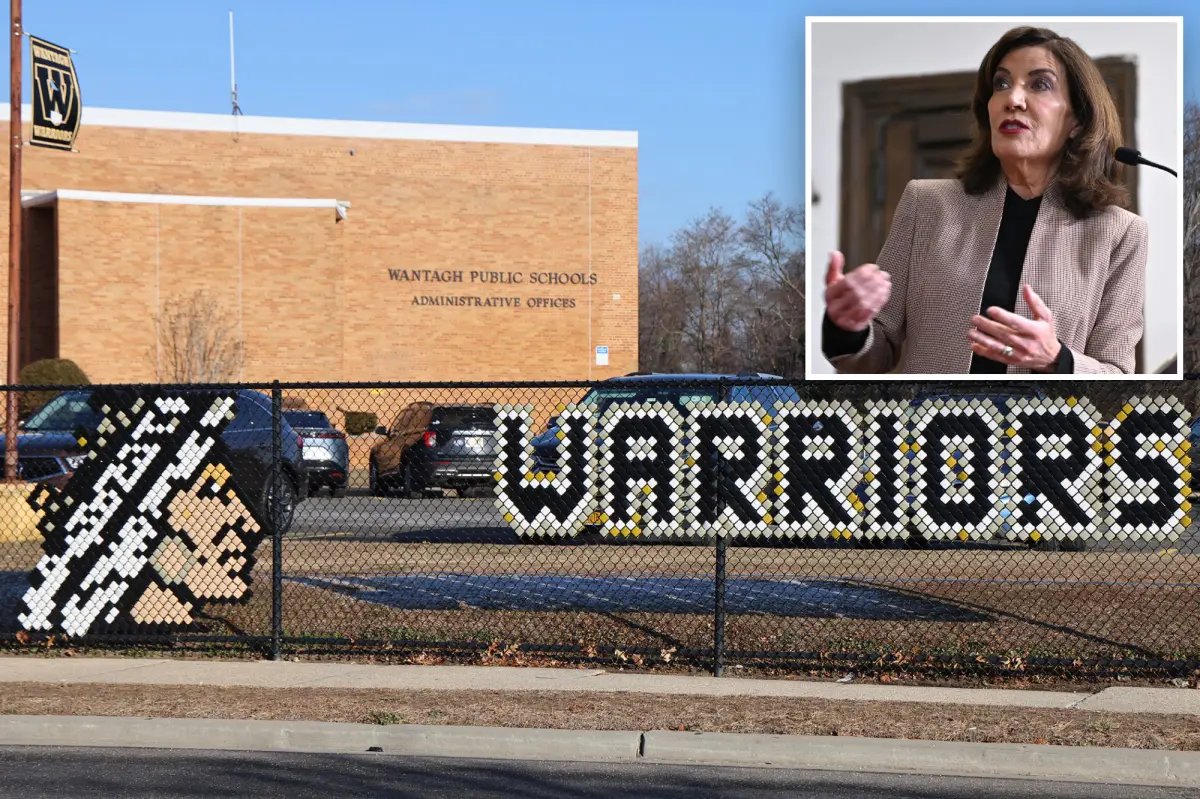


A Long Island school district will be able to hold onto its “Warriors” name an extra year — as it continues to fight a state ban on Native American imagery in mascots and logos.
Wantagh was granted an extension until June 2027 to come into compliance with the state ban, according to a letter sent by the board of education to district parents on Tuesday.
“This ensures that our students will continue to compete and learn under the Warrior name for the upcoming academic years while we continue our advocacy,” the letter stated.
“We understand how deeply the Warrior identity is woven into the fabric of the Wantagh community — our commitment to preserving the ‘Warrior’ name remains steadfast — we will continue to advocate for our traditions,” the letter added.
This marks the second extension granted by the New York Education Department for the Warriors since the state Board of Regents ordered public schools in 2023 to scrap Native American mascots, team names and logos by 2025.
The extension effectively buys the district time while it continues to battle Albany over the ban in both state court and in a federal appeal after a judge dismissed a lawsuit challenging the ban.
“While we are fighting these legal battles, the Board of Education will continue to perform our due diligence,” the letter stated.
Long Island school districts Connetquot and Massapequa have also been tangling with the state over coming into compliance.
The Connetquot School District initially agreed to drop its longtime “Thunderbirds” name and rebrand as the “T-Birds” as part of a settlement with the state to comply with the mandate.
But that compromise backfired when the US Department of Education’s Office for Civil Rights ruled the district had violated the law by eliminating the Native American-linked names while allowing mascots “derived from other racial or ethnic groups,” like Dutchmen.
In Massapequa, school officials are locked in a bitter legal feud against the state in an effort to preserve the high school’s “Chiefs” name, arguing the mandate oversteps Albany’s authority. A federal judge dismissed that lawsuit on procedural grounds, but the district has continued to push back publicly and has vowed not to comply.
Wantagh’s school board said in its letter that it would “continue to monitor national developments, including findings from the U.S. Department of Education’s Office for Civil Rights,” noting those rulings could have “significant implications” for how mandates like the mascot ban are enforced despite losing in court.
State education officials, however, have shown no signs of retreating either.
Gov. Kathy Hochul and other state Dems have previously defended the regulation as a necessary step to eliminate stereotypes and promote inclusion, maintaining that districts must retire Native American mascots unless they obtain approval from a federally recognized tribe.
Some local advocates have sided with the ban.
“Using people for mascots is wrong,” John Kane, a Native activist and member of the state’s Indigenous Mascot Advisory Council, previously told The Post.
But other members of other indigenous organizations, like the Native American Guardians Association, called New York’s ban on such mascots “the dumbest law of all time” and vowed to fight the “racially discriminatory policy” they believe hinders the celebration of their history.
