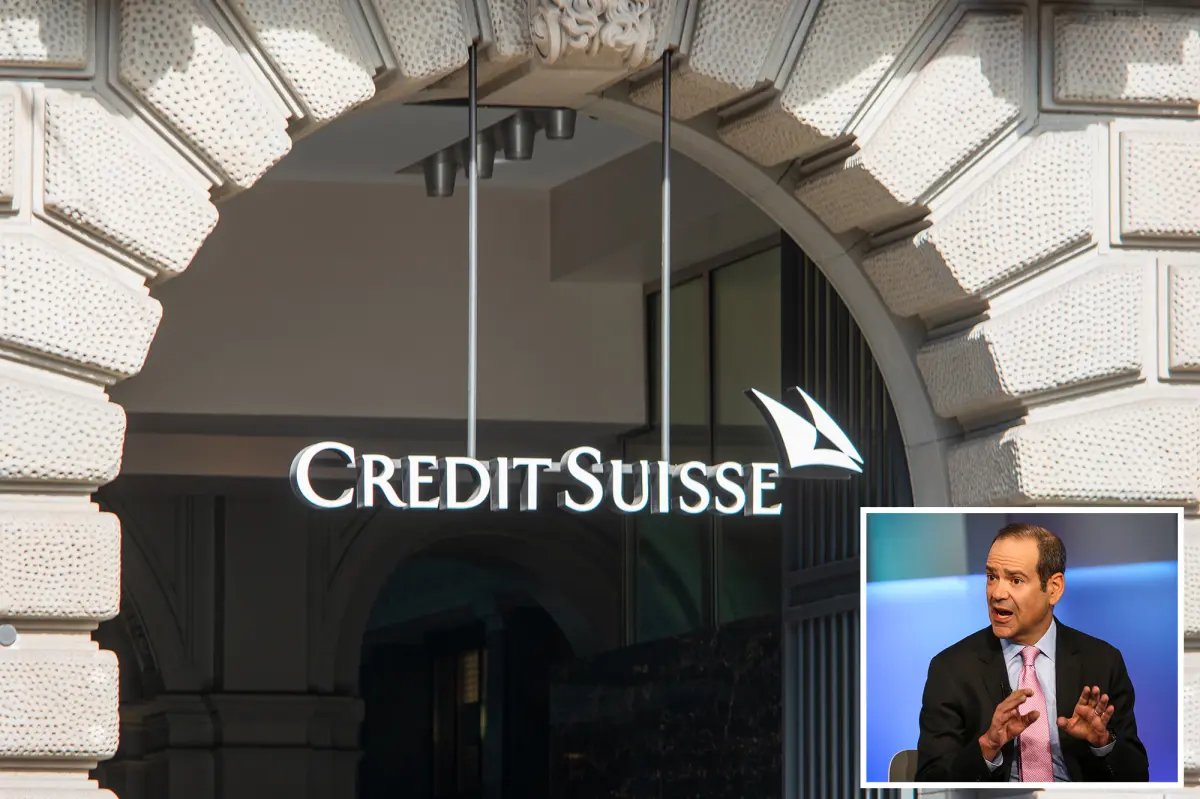


WASHINGTON — An extensive internal probe of Credit Suisse has uncovered 890 possible Nazi-linked accounts at the defunct bank that facilitated dictator Adolf Hitler’s war efforts and helped his lackeys escape to Argentina — one of several shocking findings that will be relayed to Congress during a Tuesday hearing.
The Credit Suisse investigation suffered a setback due to sidelining of ombudsman Neil Barofsky for more than a year, according to Senate Judiciary Committee Chairman Chuck Grassley (R-Iowa), who first shared some of the preliminary findings with reporters.
The discovery of nearly 900 accounts and hundreds of millions of dollars in Nazi financing at Credit Suisse will take center stage at the Senate hearing, though it’s unclear whether the revelations will prompt a reopening of a more than $1 billion settlement with Holocaust victims more than 20 years ago.
The ombudsman, Rabbi Abraham Cooper of the Simon Wiesenthal Center and UBS executives will appear before the Judiciary panel in a hearing titled: “The Truth Revealed: Hidden Facts Regarding Nazis and Swiss Banks.”
“The current investigation is supposed to ensure that no more evidence is swept under the rug,” said Grassley.
“These accounts were once used by individuals or entities who participated in or assisted Nazi war efforts,” he continued. “That includes wartime accounts for the German Foreign Office, a German arms manufacturing company and the German Red Cross.
“The investigation also found evidence the Credit Suisse banking relationships with the Nazi SS was more extensive than we knew before,” he added.
The Iowa Republican noted that new records show “the SS’s economic arm maintained an account at Credit Suisse” that recorded profits previously uncovered in part by the Swiss in the 1990s — “but at the time, the bank stifled key details from investigators and the public.”
Barofsky is also expected to dish — in prepared remarks and more than 70 pages’ worth of written testimony — on how the bank’s initial investigation in the 1990s was insufficient, according to Senate Judiciary aides.
Grassley and Sen. Sheldon Whitehouse (D-RI) have undertaken the oversight to ensure that Credit Suisse complies with all the terms of a 1998 court settlement that forced the bank to fork over $1.25 billion to Holocaust victims.
But a key negotiator in that settlement said last year that new information unearthed by the internal investigation suggests the parties “didn’t have the full records, so we were negotiating blind.”
“We probably left $5 to $10 billion on the table,” World Jewish Congress president Ronald Lauder told Bloomberg in an interview.
The Simon Wiesenthal Center also published a report in 2020 that exposed as many as 12,000 Nazis who fled to Argentina, many of whom were linked to accounts at Credit Suisse’s predecessor.
That figure was far higher than the nearly 100 Nazi-linked accounts previously identified by the forensic research firm AlixPartners, which Credit Suisse had retained for the purposes of an extensive review.
Barofsky had been appointed as an independent monitor by Credit Suisse years before to oversee the that review of the accounts — but was terminated in 2022.
Pressure from Grassley, Whitehouse, Lauder and others helped lead to his reinstatement in December 2023.
Argentine President Javier Milei also helped assist Grassley’s oversight of Credit Suisse by opening up his country’s archival records to reveal “ratlines” that the Nazis used to flee to Latin America after World War II.
“Credit Suisse leased out a building in Switzerland that the Argentine government worked out of to conduct ratline operations,” Grassley explained.
Senior executives at the Swiss investment banking firm UBS, which acquired Credit Suisse in an emergency takeover nearly three years ago, will also be testifying Tuesday, including UBS President of Americas Robert Karofsky and general counsel Barbara Levi.
“We look forward to engaging in a productive discussion with the Committee regarding Credit Suisse’s historic issues,” UBS said in a statement last month to Bloomberg News.
UBS’s March 2023 buyout was valued at 3 billion Swiss francs or $3.25 billion USD.
In a filing late last month, attorneys for UBS asked a Brooklyn federal judge to order all parties to the initial settlement not to “promote, assist in promoting or cause to promote any public controversy (in the media or otherwise).”
The attorneys also asked that the judge would ensure no parties “demand or request any additional financial payment” or “make any public statement or take any action that would be inconsistent with [their endorsement of the Settlement].”
Attorneys for the Simon Wiesenthal Center objected to the order and wrote a letter back to US District Judge Edward Korman that the proposed order would “obstruct SWC from engaging in protected First Amendment activities, namely its longstanding mission of investigating and bringing to light the full scope of the antisemitic campaign engaged in by the Nazis before, during, and after World War 2.”
The Credit Suisse hearing comes as the US has endured an 893% surge in antisemitic incidents between 2015 and 2024, according to an Anti-Defamation League audit released last year.
Grassley has expressed hopes that the publication of many of the records from the internal investigation will serve as “a central repository for posterity to allow researchers and similar folks to access these materials over the decades.”
Barofsky is expected to conclude his more than five-year probe as ombudsman this year with a final report.
A rep for UBS said, “We look forward to engaging in a productive discussion with the Committee regarding Credit Suisse’s historic issues.”
