


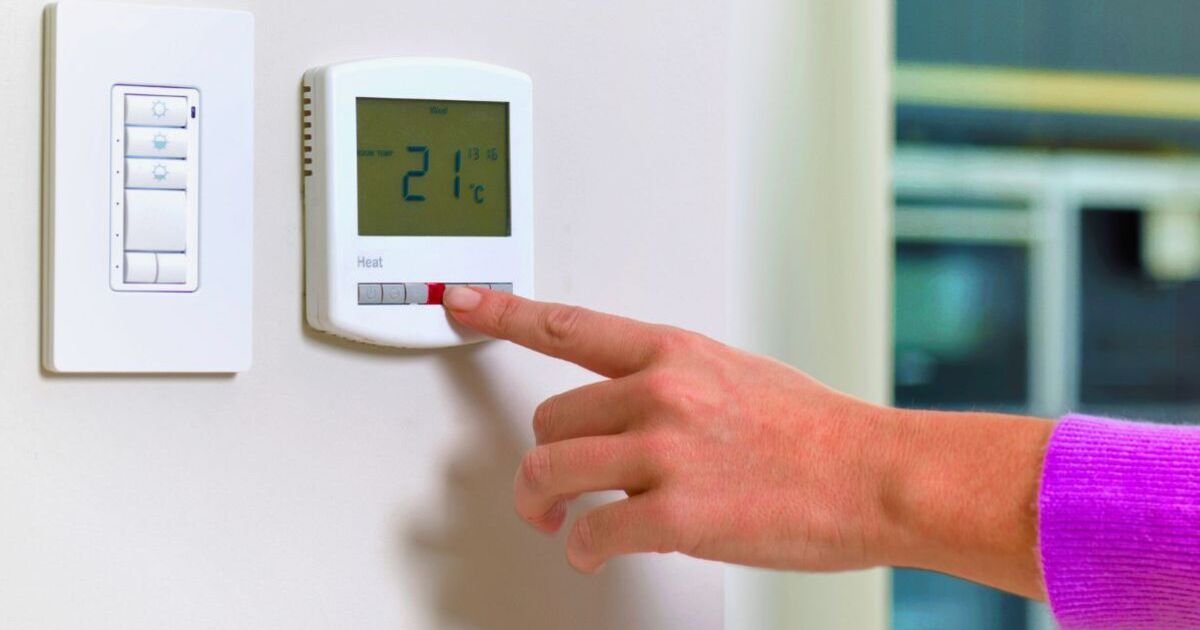
January is often the coldest month of the year, and once a room feels chilly, most households crank up the thermostat to warm their home as quickly as possible. However, thermostats are not designed to heat up any faster, and turning the dial all the way up does nothing to speed up the process.
An expert from Emergency Plumber London has shared that setting the thermostat to a high temperature is actually a “waste of energy” and will likely cost you more money in the long run. They said: “The reason is that a thermostat does not have any control over how soon your house will heat up. What it can do is set the final temperature and ensure that you are comfortable.”
Thermostats are designed to act as switches, and when you set them to a higher temperature, they simply keep the heating on until the set temperature is reached.
Raising the temperature will not warm your home any faster, as it simply keeps the heating system on longer, which can ultimately add a significant amount to your energy bill.
Instead, if you want to get warm quickly, it is better to focus on adjusting the radiator valves, as this will help spread the heat around the home more efficiently.
The expert said: “A great tip is to turn on the heating system and set the radiator valve in the room to a comfortable level.
“After this, you can set the valves in the remaining rooms that you are using. The rooms that are not used need to have closed doors and radiators set to their lowest level.”
Radiators all share the same hot water supply in the same way, and if you leave the radiator valves fully open in unused rooms, it will just waste heat and energy.
If you close the valves in rooms you are not using, more hot water will be pushed into the radiators in the room you are sitting in, so you will heat up much faster.
Thermostats only determine whether the heating should be turned on, while radiator valves are used to adjust the desired room temperature in your home.
The temperature you wish to set your thermostat to depends on your comfort level, but do not set it to an extremely low temperature, as it will take more time to reheat.
The expert said: “Most houses require near one hour to warm up from 16 degrees to 21 degrees and so, you need to adjust the programme accordingly.”
If you wish to stay warm and save money this winter, set the thermostat to around 18°C to 21°C, as this is widely considered the most optimal temperature for a home in winter.