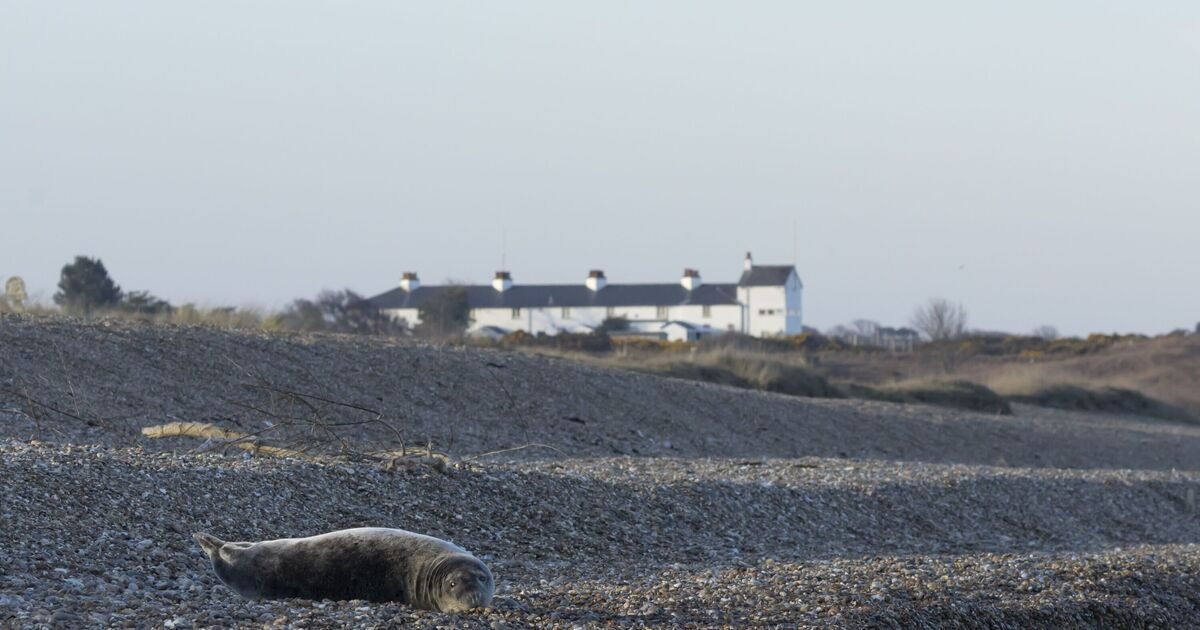

A quaint village, once a bustling medieval port that was the capital of East Anglia, offers an ideal day trip for history enthusiasts or lovers of peaceful, windswept beaches.
In the era of the Anglo-Saxons, Dunwich, nestled on the Suffolk coast, was the heart of what was then known as the Kingdom of the East Angles. Its international port was seen as a competitor to London, and the Domesday Book of 1086 recorded its population at over 3,000 – a significant number considering London’s populace stood at just 18,000. However, Dunwich’s prosperity took a dramatic turn in 1286 when a storm surge battered the region, followed by two substantial weather fronts the subsequent year. This triggered severe coastal erosion, resulting in large swathes of the town being swallowed by the sea.
It’s believed that in 1347, around 400 homes were swept away, with the majority of the town’s remains then obliterated in 1362 during Saint Marcellus’s flood, a catastrophe that claimed approximately 25,000 lives across Europe.
Owing to its intriguing history, Dunwich is often referred to as the ‘lost city of England’, drawing parallels with the mythical island of Atlantis, reputed to have sunk beneath the waves, reports the Mirror.
The Dunwich Museum provides a fascinating insight into life before the devastating floods. Researchers have painstakingly charted the locations of the original homes and structures before their submersion, and these maps are on display. Additionally, many captivating exhibits offer a glimpse into medieval life, showcasing artefacts from the period.
Only a handful of ruins from the medieval era remain intact today, with one of the most preserved structures being the Greyfriars monastery. This was constructed approximately half a mile inland after its coastal predecessor succumbed to the elements.
The remnants include the grand entrance to the monastery and a section of the refectory where the monks would have dined.
The National Trust’s Dunwich Heath and Beach is an untouched haven boasting picturesque walking trails. The Heath is teeming with rare wildlife and bird species, and if you’re lucky, you might even spot red deer and otters during your walk. Dunwich’s vast shingle beach is a popular location for fishing enthusiasts and those who enjoy a paddle in the sea.
Not all vessels destined for Dunwich reached their port safely, leading researchers to uncover numerous shipwrecks off the coast. As reported by the East Anglian Daily Times, there could potentially be hundreds of ships resting in a maritime graveyard off the coast, many of which met their fate during World War I when shipping routes were targeted.
After a day of exploration visit the quaint Flora Tea Rooms. This traditional fish and chip restaurant situated on the beach also offers quintessential British favourites such as afternoon tea. The village boasts a single pub, The Ship at Dunwich, a cosy establishment complete with a beer garden and stunning views of the surrounding countryside. It also provides 16 rooms should you wish to extend your stay and soak up more of this tranquil village’s charm.
Dunwich is conveniently situated near the RSPB Minsmere, a coastal nature reserve full of woodland, reedbeds, grassland, and heathland. Amid this pristine landscape, you can observe an array of wildlife, from a diverse collection of coastal birds to Water Voles.
Have a story you want to share? Email us at webtravel@reachplc.com
