
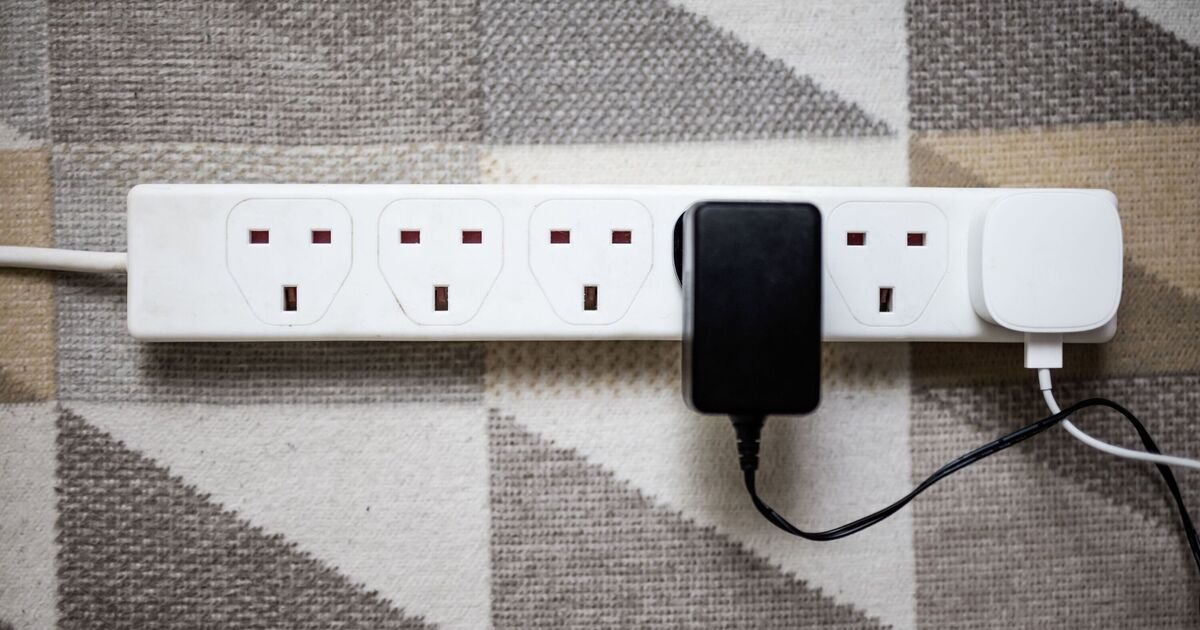

Households in the UK are being urged to think twice about using extension leads in their kitchens as experts warn they could pose a serious fire hazard. With modern kitchens now packed with gadgets like air-fryers, coffee machines and toasters, many households find they don’t have enough plug sockets to power them all.
The quick fix is often an extension lead, but this convenience could come at a hidden cost. James Harrison, electrician at Fusion Electrical, said: “Small kitchen appliances such as kettles, toasters and air-fryers can draw a large amount of power. Plugging several of them into a single extension lead could overload it, creating dangerous heat build-up.”
He explained that while the fuse might not blow straight away, repeated overloading could weaken the cable over time.
James warned: “The danger is that the damage often happens inside the cable where you cannot see it. By the time scorch marks or a burning smell appear, the risk could already be high.”
Another thing that can be a potential danger for your kitchen electricals is the amount of moisture that hangs around.
It’s obvious that water and electricity don’t mix, and James urged people to keep extension leads well away from things like sinks, kettles or hobs, which could make the situation “even more unsafe”.
As well as being a fire hazard, crowded extension leads could also harm appliances themselves. James explained: “High-powered gadgets need a steady supply of electricity.
“If the voltage drops because a lead is overloaded, it might shorten the lifespan of your devices or cause them to fail.”
So if you’re regularly short of plug sockets in the kitchen, the safest option could be to have a professional install extra outlets, instead of constantly relying on an extension cable.
James added: “It’s a one-time upgrade that might save you a lot of problems later.”
James has also recommended a couple of quick safety checks that can help you to get the most out of your appliances to keep your home as safe as possible.
The first thing is to always look at the wattage of your appliances. A kettle or toaster on its own might be alright in a plug socket, but running two or three high-powered gadgets through one lead could push it beyond its limit.
You should also always choose extension leads that are clearly marked with a British Standards kite mark, as cheaper, unbranded ones might not be built to cope with the demand.
Finally, if you notice scorch marks, a burning smell or a hot cable, it could mean the lead is under strain. James said: “Unplug it straight away and do not use it again.”
