


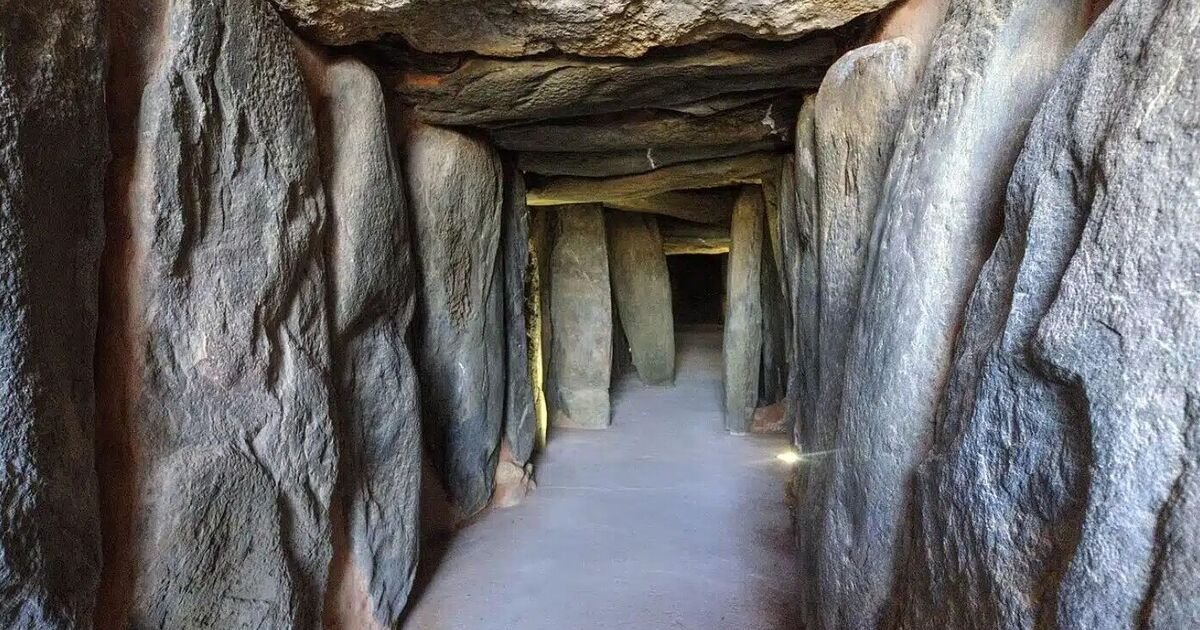
An incredible 5,000-year-old dolmen, or megalithic tomb, has been uncovered by archaeologists in southern Spain, which hopes to shed new light on funerary rites from millennia ago. The structure, identified as Dolmen I of the La Lentejuela necropolis in Teba, in the southern province of Malaga, is around 43 feet long and contains a complex internal layout with multiple ossuaries (rooms housing the bones of the dead) and rich grave goods, researchers from the University of Cádiz have said.
Among the artefacts uncovered were items fashioned from ivory, amber, marine shells, and finely-worked flint, including arrowheads, large blades and an impressive halberd – a two-handed pole weapon that combines an axe blade and hook. These items have led the archaeologists to hail the find as evidence of social hierarchy and far-reaching trade networks. “This could be one of the most monumental and complete dolmens in all of Andalusia,” said Professor Serafín Becerra, director of the Teba Museum and co-leader of the project.
Co-director Eduardo Vijande of the University of Cádiz emphasised the site’s state of preservation: “The extraordinary condition of this structure will allow us to learn in great detail about the lives and beliefs of these communities,” he said, according to Greek Reporter.
“The presence of marine shells in an inland territory reflects the importance of the sea as a prestige element and confirms long-distance exchange networks,” said Professor Juan Jesús Cantillo of the University of Cádiz.
Archaeologists have used a combination of traditional field methods and lab techniques, including microclimatic monitoring and X-ray fluorescence, to document the monument and begin analyses of materials and manufacturing techniques. The team has also produced detailed digital records of the monument to preserve its form and contents for future study.
This incredible discovery comes as archaeologists working in Armenia announced they have finally cracked the mystery behind 6,000-year-old “dragon stones” found in the country, known as “vishap stele”. Researchers from Yerevan State University and the Institute of Archaeology and Ethnography have completed a study that suggests the deliberate placement of the stones near springs, along with their fish-like carvings, points to a ritualistic significance.
Last month, a new statue emerged from a dried-up lake on Easter Island, Chile, which has left experts baffled in a major “first”. The statue, known as a moai, is believed to be between 700 and 1,000 years old and stands at around 5.2 feet tall.
“We think we know all the moai, but then a new one turns up, a new discovery, and in this case, it’s in the lake, at the statue quarry,” said Terry Hunt, professor of archaeology at the University of Arizona. “There have been no moai found in the dry lakebed before, so this is a first.”