


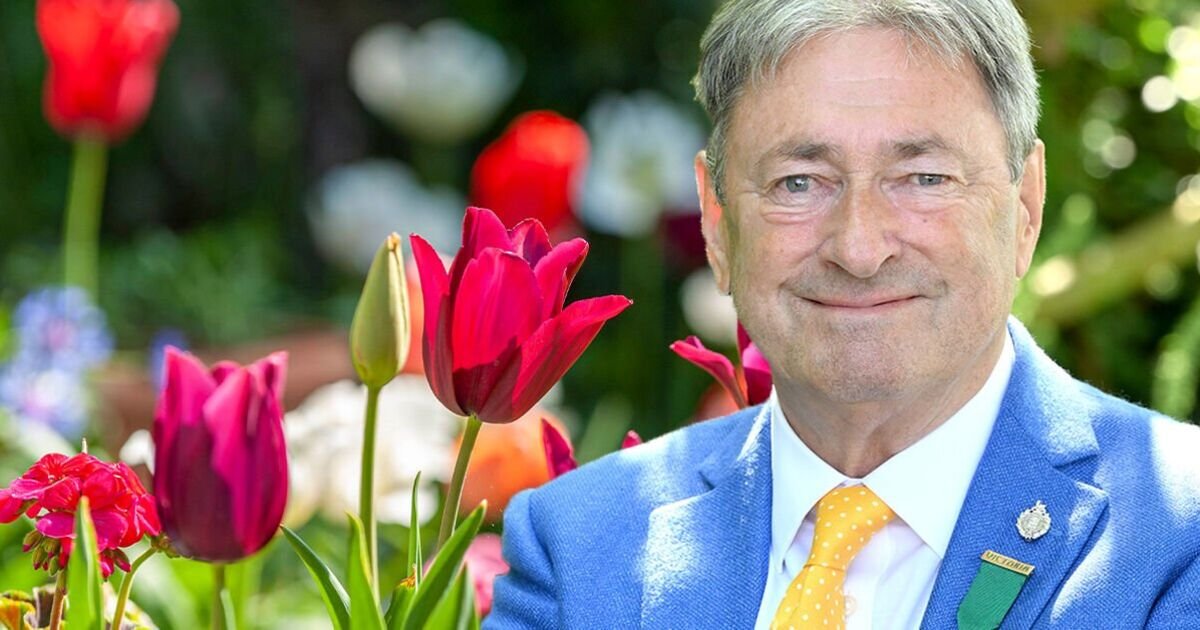
Gardener, author and TV presenter Alan Titchmarsh has shared his methods for planting bulbs in September. The gardening expert shared which bulbs to plant now and the three main methods he uses for the best display. September is the best time to plant spring bulbs ready for a beautiful burst of colour from February through to May next year.
In a video on his YouTube channel, Gardening with Alan Titchmarsh, the gardener shared how to plant three bulbs—daffodils, tulips and crocuses. The video description reads: “Now is the perfect time to plant spring bulbs and you can do it even if you don’t have a garden! Put them in now and they will give you a welcome burst of colour from February right through until May of next year.”
How to plant spring bulbs in September
1. In containers and pots
Alan said it’s important to check the quality of bulbs before planting them. They should be fat and firm to ensure plenty of flowers bloom from them.
Planting bulbs in containers and pots is the “easiest” method, as it can be done even if you don’t have a garden.
Firstly, gardeners need to arrange bits of broken flower pot or gravel over the drainage hole to prevent worms from clogging the hole and the pot from becoming waterlogged.
Next, you need to add your compost. Alan uses a peat-free multi-purpose mix and fills the pot about halfway.
Then, it’s time to add your first layer of bulbs. This technique is called “lasagne” planting because the bulbs are planted in clear layers. The reason the bulbs are planted like this is so they produce a long-lasting flower display.
Alan’s first layer is tulip bulbs, which will flower in April and May. He planted three different varieties that complemented each other, including ‘National Velvet’, ‘Bojangles’, and ‘Candy Apple Delight’.
He then covered the tulip bulbs in compost and started planting the second layer, which included daffodils and narcissi. He chose a white variety known as ‘Snow Fusion’, which grows in varying heights, as well as ‘Doll Baby’ and ‘Replete’.
After planting this layer, he added some more compost before starting on his layer of crocuses. He chose a variety of colours, including ‘Jeanne D’Arc’, ‘Golden Yellow’ and ‘Prince Claus’. The crocuses will be the first to flower in February and March.
Alan explained why the bulbs are planted in this order in the pot: “It’s in reverse order of flowering. The crocuses flower first; up they’ll come, bloom fade. The daffs will then come up to hide their embarrassment and flower on top.
“And as the daffs are fading, then the tulips have had time to come all the way up. And because the tulips are 16 to 20 inches tall, they’ll cover up the mess that the daffodils are leaving.”
2. In borders
Alan likes to plant his bulbs at the front of beds and borders for a beautiful pop of colour come spring.
The first bulb he planted was a dwarf miniature narcissus, a variety called ‘W.P. Milner’.
To plant bulbs in borders, gardeners need to dig a hole that is three times as deep as the bulbs that are being planted. Place the bulbs in the bottom of the hole with the shoots facing upwards, ensuring they’re spaced apart so they’ve got plenty of room to grow (around one and two inches apart).
Next, fill in the hole and lightly firm over the soil. The bulbs can be dotted around the border or planted in clumps.
3. In a lawn
‘Naturalising’ bulbs is when you plant them in grass. These bulbs flower in spring and then die off when the grass grows taller.
The gardening expert said he likes to grow daffodils in clumps in the lawn, but with tulips, he plants them singularly in one area so they look like a wild flower meadow.
To plant bulbs in his lawn, he uses a bulb planter and spaces each individual tulip bulb around 12 inches apart.
He then drops a bulb into each hole and places the grass plug back into the hole to cover them.