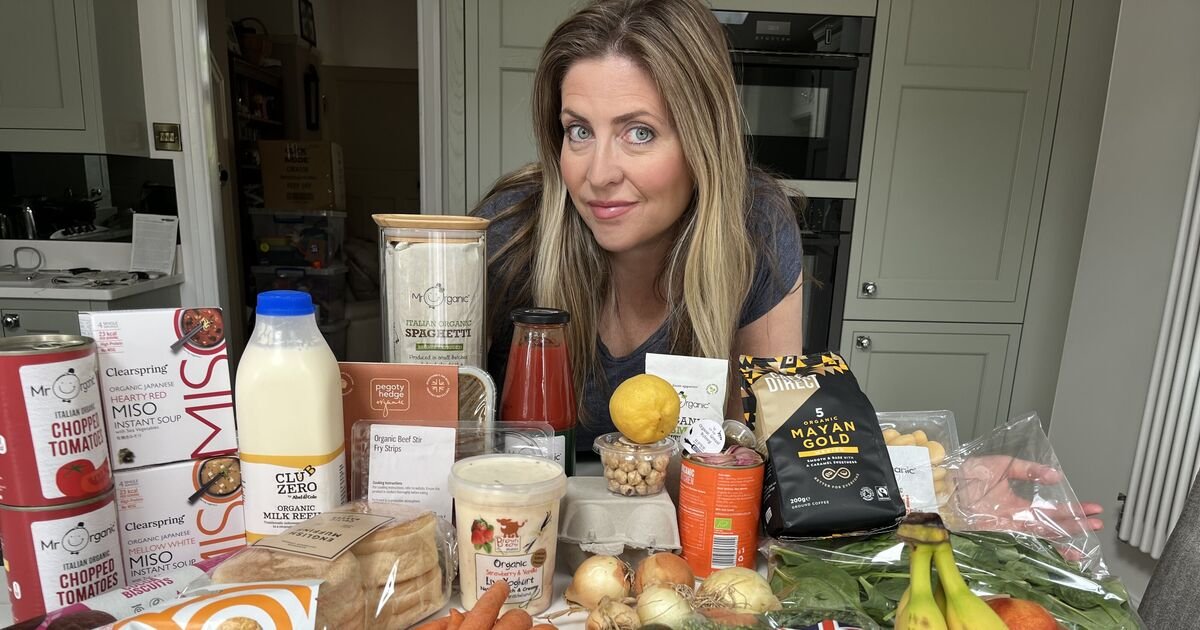


Reporter Dianne Bourne took part in a trial to see what impact eating ONLY organic food and drink fo (Image: MEN)
Organic September has arrived: a month dedicated to championing the advantages of weaving organic produce into our everyday routines. A mum of two and Lifestyle editor Dianne Bourne admitted that in recent years she has made a conscious effort to transition to organic products where feasible, particularly when it comes to fruit and vegetables, in a bid to reduce the quantity of artificial additives in the dishes she prepares for her family.
There’s an increasing movement of individuals attempting to escape their dependence on “ultra-processed foods” altogether, following studies into the potential damage they might inflict, and are returning to more natural foods for a healthier lifestyle. Spotting ‘organic’ on a product label offers confidence that it has satisfied rigorous farming and animal welfare requirements.
Read more: McVitie’s unveils brand new chocolate bar
Read more: Mac and cheese will have much more flavour if you add 2 strange foods

Organic store cupboard essentials from Mr Organic (Image: MEN)
Only foods and products that fulfil strict guidelines and have been verified by an authorised UK organic control body like the Soil Association Certification can display the ‘organic’ label. This encompasses the elimination of synthetic fertilisers and pesticides in the growing process, as reported by the Manchester Evening News.
Nevertheless, one obstacle that many individuals encounter is the expense of organic food, which can be considerably steeper than its conventional alternatives due to the production techniques.
Dianne confessed: “The costs were something I looked at last year when I did a full week of eating entirely organic food and drink to mark the 2024 Organic September. This year, the Organic September campaign is focusing on the health benefits people might want to consider in swapping to more organic produce.
“With this in mind, the organisation behind the campaign, the Soil Association Certification, challenged me to go fully organic for a whole month to see if, and how, it would benefit my gut health and overall well-being. I was asked to take part in a UK trial, alongside five other volunteers, to see if eating organic for a month would have a positive impact on our health.”
Prior to the trial commencing, participants were told to avoid any organic foods for a fortnight. They subsequently underwent a series of gut examinations at an independent clinic before beginning the organic food experiment.
Following four weeks, the group repeated the identical tests to obtain the findings. Certain participants were only required to change their fruit and vegetables to organic. Nevertheless, others, including Dianne, went completely organic for the entire month.
To guarantee fairness in the trial, she sought to mirror her typical diet but replaced everything with organic alternatives. Here’s how Dianne got on.

An organic fruit and vegetable box from Abel & Cole (Image: MEN)
What was consumed during the month
Dianne revealed: “To ensure that I ate entirely organic produce for a month, I was given a weekly budget of £100 to order food from two nationwide organic food delivery companies, Abel & Cole and Riverford Organic.
“The last time I did a fully organic food trial, to celebrate Organic September in 2024, I struggled to find a good selection of organic produce in many of the major supermarkets, other than Waitrose. So it was good to be able to browse a fairly extensive selection of produce on both of these online sites, and then have it all delivered to the door.”
She went on to say: “I also started the trial with two boxes of store cupboard essentials from organic food companies Mr Organic and Clearspring, with things like pasta, tinned tomatoes, biscuits, crackers, olive oil and soups which cost £85, as well as organic Mayan Gold ground coffee from Cafédirect which retails at £6 a packet.
“I was a bit concerned at the beginning about how I would make the £100 stretch to a complete weekly food shop, particularly as I have two children to feed, but amazingly I managed it.”
Every week, she selected a mixed fruit and vegetable box, alongside a weekly meat order rotating between fish, minced beef and chicken to create a range of different meals. Breakfasts alternated between fruit, Greek yoghurt, and scrambled eggs on toast. Lunches comprised dishes like mozzarella and tomato on sourdough toast or ham sandwiches.
Dinners were mostly homemade, featuring dishes like stew with vegetables, roast dinner, and spaghetti bolognese. Dianne’s primary shift was swapping anything heavily processed for whole foods. All too often, she found herself resorting to quick meals when she was bustling around at home, and she also had a habit of snacking on biscuits and chocolate.
Dianne said: “For me, I was able to swap pretty much everything I would normally eat for an organic version, though, which was great – even down to organic chocolate buttons and even an organic cake I bought as a treat one week.
“I was even impressed to be able to get an organic “ready meal” of sorts, a lovely chicken stew, which was delicious without a long list of additives that a supermarket-bought microwave meal would have. I also enjoyed the organic “meal boxes” from Riverford Organic, where you get all the ingredients and recipe card to make a meal from scratch.
“Just as I found last year, the price of organic chicken was the biggest cost to bear, costing an eye-watering £18 for a small chicken, compared to around £5 that I normally spend on the supermarket version. However, it’s a little easier to stomach the price when you consider that the cost of organic chicken is due to the fact they live longer with strict welfare rules including much smaller, free-range flocks.”
She went on to say: “The fruit and veg boxes from Abel & Cole I felt represented pretty good value, as for £17.95 I got a hefty selection of British produce that I was able to use across the week in a variety of meals – and I did find that I was eating more vegetables as a result of going organic for the month.”
What were the drawbacks?
Dianne revealed: “The main downside of my month of organic eating was the fact it was really, really tricky to eat out at all if I wanted to stick to only consuming organic food and drink. So few restaurants, cafes and takeaways seem to promote if they have organic produce on their menus – I really feel it would be beneficial if more did this – perhaps Organic September could be the time for places to shout about it.
“For events I was already committed to attending during the test period, I found I had to ask bar staff which drinks were definitely organic, or simply drink water. While at a buffet event I had to wait to get an answer from the kitchen until being told “only the mozzarella is definitely organic”, so that ended up being a night of cheese only for me!”
She confessed to being devoted to the experiment, which meant she found it simpler to rely on home cooking for most of the month, leading her to reduce her nights out. Nevertheless, she genuinely longed for a lovely takeaway coffee and felt let down that she couldn’t locate anywhere that guaranteed a completely organic coffee and milk experience in the spots she visited near her home and also in the city centre.
She appealed: “So if you’re reading this and you ARE a restaurant or coffee shop with a great organic range in the north west, then please do get in touch with me.”

Dianne with a weekly organic shop of produce (Image: MEN)
What effects did it have on my health?
During the challenge, Dianne was required to maintain a food diary and reflect on how she felt daily. Within a week, the mother of two could already sense the beneficial effects of consuming a whole food diet and abandoning processed rubbish.
She disclosed: “I generally suffer from headaches, but after the initial couple of days, I didn’t have another headache for the entire month. I also have a Fitbit tracker, and I noticed across the month that my sleep improved and also that my resting heart-rate dropped from 73bpm at the start of the experiment, to 68bpm by the end.
“By the end of the month I also felt weirdly calm – I don’t know if that was connected to the food, but it felt like a positive benefit of eating in a more ordered fashion I suppose.”
Did she lose any weight?
Whilst shedding weight wasn’t the main objective of this trial, she stepped on the scales at both the beginning and conclusion of the month to monitor any alterations. Much to her joy, she found that she had actually dropped weight by the month’s end – “a not so insignificant 5lb.”
She explained: “It felt particularly good as I did not deprive myself of any ‘treats’ during the experiment – everything was simply swapped to organic versions so yes I still had a bit of cake if I fancied it, or a nice glass of organic prosecco, and I was consuming things like whole milk and butter – but everything was as nature intended I suppose.
“I do feel, though, that eating pricey organic chocolate buttons, for example, especially given their cost, made me less likely to binge on a whole packet, so I can see that I was probably consuming fewer calories overall.”
What were the results of Dianne’s gut health test?
Dianne disclosed: “It’s important to note that my gut health tests at the start were all in a broadly “normal” range, and I’m overall a fairly healthy 48 year old, with no medical conditions. After a month of fully organic eating, I noticed a reduction in my Firmicutes/Bacteroidetes (F/B) ratio which was explained may be connected to my weight loss across the month.
“My Akkermansia muciniphila abundance also increased. These bacteria feed on the gut lining and are linked to better metabolic health – I was told an increase can also be associated with weight loss. The one area that had a “significant” improvement across the group of six people tested was a ‘clinically significant improvement in intestinal permeability in the before and after results.”
She added: “Again, it’s important to note that my gut permeability was already within a normal range at the start of the experiment, but did slightly improve by the end test.
“Intestinal permeability is a measure of what passes through the intestinal lining into the bloodstream. A more permeable intestinal lining or “leaky gut” is associated with health issues like gastrointestinal symptoms, headaches, fatigue and inflammation.
“However, I was surprised to find that eating organic made no difference whatsoever to my inflammation levels, which were slightly raised at the start and remained so at the end. Nor was there an impact on my gut diversity, which I was a bit peeved about, as I felt I’d eaten a broader range of vegetables than I’ve ever done for the month.”
Following the trial’s completion, experts suggested Dianne should include more kefir and fermented foods in her meals to boost gut diversity.

Fruit and veg grown organically was order of the day (Image: MEN)
What did the health experts say?
Jordan Haworth, Clinical Gastrointestinal Physiologist at The Functional Gut Clinic, conducted the assessments on the participants. Upon finishing the trial, he revealed: “There was a clinically significant improvement in intestinal permeability, or leaky gut, amongst all participants. This may be due to a reduction in dietary pesticides, which have been shown to cause leaky gut, at least in animal studies.
“However, in humans, there are currently no studies showing pesticides in diet directly cause a leaky gut. There is some data which shows the prevalence of digestive disorders, specifically irritable bowel syndrome, and cognitive disorders, such as Alzheimer’s disease, are more common in areas with high pesticide use.
“However, this seems to be related to environmental pesticide exposure, and not dietary pesticide exposure. Therefore, there is a need for studies on dietary pesticides and health in humans. This experiment found that switching to more organic produce led to an improvement in leaky gut. However, there are some important caveats.
“For example, the participant who saw the largest improvement in intestinal permeability also reported an increase in daily vegetable intake and reduction in weekly fast-food intake during the challenge. Also, only two out of six participants had a borderline clinically “leaky gut” in the first instance, so we cannot say that eating conventional produce is causing a leaky gut.
“In addition, each participant ate organically for different food groups, so it’s unclear which type of organic produce may lead to the greatest reduction in intestinal permeability. Future studies should look to see if eating more organic can improve intestinal permeability in a larger sample, controlling well for diet, and to see if it’s particularly helpful for people with a clinically ‘leaky gut’.”
The final word
While more extensive research would be needed to scientifically prove the benefits of consuming organic food, Dianne emphasised that she genuinely felt better after a month of eating organically. She was thrilled to have lost 5lbs without any effort at all – considering she was indulging in a fantastic variety of delicious foods, including treats and the occasional glass of wine, with no restrictions other than everything being organic.
Dianne enjoyed all the organic alternatives she tried, and it introduced her to a range of products she hadn’t even known existed – such as the organic “ready meals” from Abel and Cole, plus the scrumptious organic biscuits and crackers from Clearspring which she’ll “definitely be buying again.”
She concluded: It was also not as expensive as I thought it would be – I think it helped to stock up on store cupboard essentials at the start of the month which enabled me to plan meals more efficiently, and it has encouraged me to do this in the way I shop more regularly.
“I have continued to choose a host of the organic produce I tried during this month in my normal shopping now too. The overall cost of food during the month was £497, working out at around £125 per week, which is actually slightly less than I normally spend on my average supermarket shop per week of around £140 on food – but then I wasn’t piling in things like sweets, crisps and treats that I would normally do.
“I think because I knew I HAD to stick to organic food, I made the foods I already had in the fridge and cupboard stretch that bit further, particularly that expensive chicken. Learning to make more from what I already have has been a useful trick I have now continued in the way I cook and shop moving forward.”
