


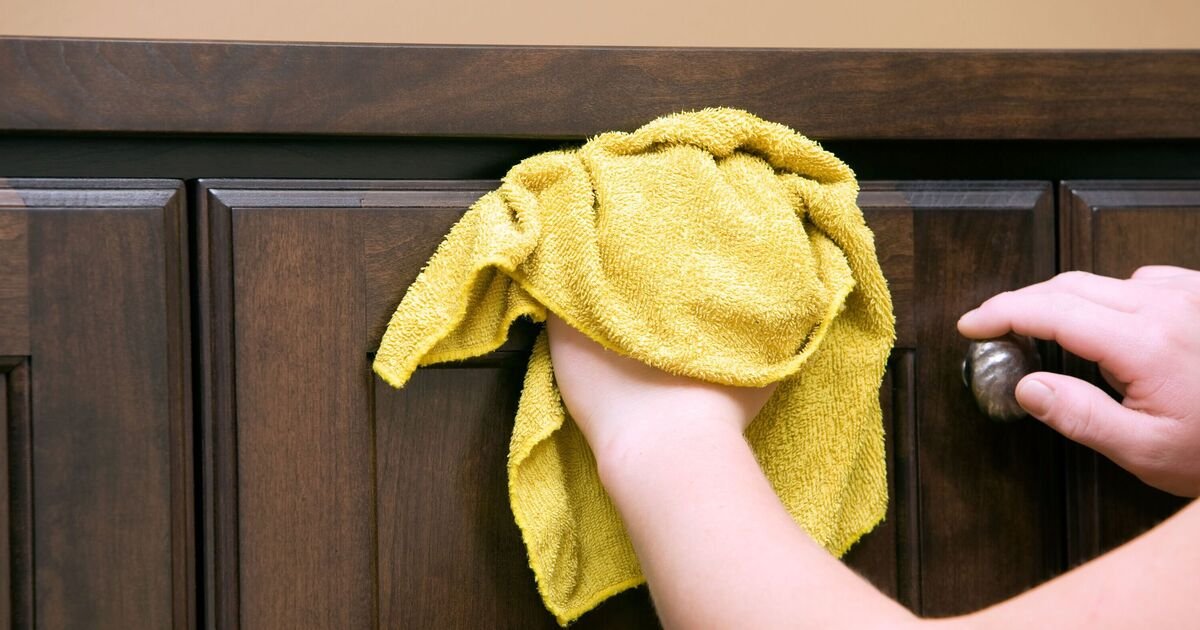
Wooden cabinets, pieces of furniture and floors can appear fairly easy to clean, but making sure they get the proper maintenance to stay in good condition is another ball game. It’s important to remember that it takes a certain type of maintenance to make sure they’re sparkling clean while not damaging the wood itself.
Wood cabinets are finished with a variety of durable, protective coatings such as varnishes and lacquers, but these tend to be quite thin. To keep wooden cabinets in good nick, it’s important to clean them carefully. Experts have recommended one natural product to help cut through grease in a deep clean without compromising the appearance of the cabinets.
What you’ll need
- Vacuum with a bristled upholstery attachment
- Microfiber cloths
- Mild dish soap
- White vinegar (for deep cleaning)
- Mineral oil
- Warm water
- Spray bottle
- WD-40 (optional)
Firstly you’ll need to give the cabinet a good dusting to mop any loose dust without sweeping it back into the air. If you don’t have a vacuum, you also hand-dust with liquid or furniture polish applied to a soft rag, or a damp sponge or rag.
It’s best to clean wooden cabinets as needed, probably about once a week. For a deep clean, you can start with a solution of soapy water. Chris Marshall, a furniture builder, cabinet maker, and senior content creator for Rockler Woodworking and Hardware, told Southern Living: “Suds-up a soft, clean sponge or cloth with the solution, wet the surface, and rub gently. Let the water and soap do the work.”
You won’t need to scrub hard, but once you think it’s cleaned, dry and see if any grease residue is left. To help cut through grease even more, add half a cup of white vinegar to the soapy water solution.
Adding white vinegar to your cleaning solution is helpful due to its level of acidity – as well its acetic acid content – helps dissolve any dirt, grease and grime. It can also help to kill bacteria on surfaces. The Spruce noted that distilled white vinegar and cleaning vinegar are great options for deep cleaning.
Acetic acid helps to dissolve various mineral build-ups, including limescale deposits. It also helps to kill bacteria and fungi that cause bad and unwanted smells as vinegar is a natural deodoriser.
Marshall suggested avoiding commercial degreasers such TSP (trisodium phosphate), other chemical bathroom cleaners, ammonia, or bleach. Another point to be aware of is using excessive amounts of vinegar on wooden cabinets can damage certain finishes.
Try spot testing with vinegar on the cabinet first before cleaning. To help wooden cabinets get their shine back, the experts recommended mineral oil.
Ron Shimek, President of Mr. Handyman, a Neighborly brand, said: “Mineral oil can help condition and restore shine to some wood types. Look for polishes that are compatible with your cabinet finish (e.g., oil-based, water-based).”
Mineral oil will make a wood finish look shiny too, but keep in mind that the residue it leaves behind can attract dust and grime, which can be counterproductive.