
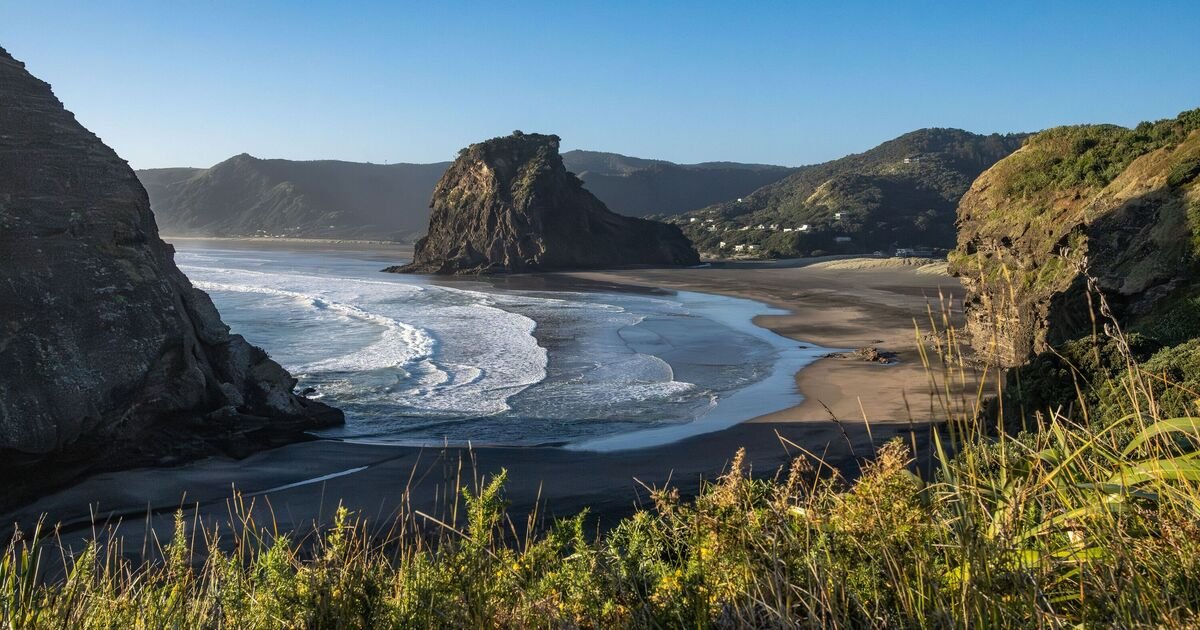

Wild, remote, rugged and dangerous are some of the words frequently used to describe New Zealand’s Piha Beach. The huge powerful waves that smash against the jet black sand can be treacherous, and the cliffs surrounding the beach are primed for rock falls. Even the drive to get to this beach is steep, winding and challenging.
For all intents and purposes, this is a beach that begs people not to visit it – but Piha Beach was my local beach for many years, and despite the danger it presents, I can’t think of a more awe-inspiring place. Driving to Piha Beach took me around 20 minutes, and I used to love to do the drive with my windows down.
As my old Toyota Vitz rattled along the meandering road through the lush subtropical rainforest, the ear-splitting calls of cicadas would fill the car – in the height of summer it was near deafening. Through the buzz of the cicadas, you could also hear the calls of New Zealand’s native birds whistling and trilling in bizarre harmony.
As you round the last curve of the road that winds through the Waitakere Ranges in West Auckland, the gleaming black sand of the beach reveals itself, laid out beneath you from the top of the hill.
To the North, there’s Lion Rock – a huge rock formation that juts out from the beach into the crashing waves. Named for its resemblance to a Lion lying on its front, this 15 million year old volcanic rock formation has an imposing presence over the beach.
When I was younger, you could climb all the way to the top of this huge mountain and stare down at the people on the beach, ant-like beneath you – however, over the years, rock falls have made the mountain unstable, so the path is now closed.
The sand gets its colour from the ancient volcanic eruption of Taupo which was so powerful, it is said to have caused red skies as far away as China and Rome.
The sand which still washes up at Piha Beach is rich in iron, which means it is highly magnetic. Because the sand is so dark, it also gets incredibly, viciously hot in the summer months.
Summer visitors to the beach are frequently seen sprinting from their beach towels near the dunes all the way down to the water. Some experts will bring a towel or a boogie board with them on this run to take the occasional break from the scorching sand. I once had a pair of sandals melt into the sand because of the extreme heat.
Once you reach the ocean, hopefully with your feet unscathed, you are met by the raw power of the surf. The waves have to be seen to be believed, and if you’re a strong swimmer then it is one of the best swims you will ever have.
Just make sure that you never, ever get near the water if the surf lifesaving club isn’t there. You’ll know if the beach is being guarded by the presence of the flags on the beach which indicate what section of the water is safe to swim in – always ensure you are swimming between these flags, because to ignore them can easily be fatal.
The currents are incredibly strong, so even if you start between the flags, it’s crucial to keep checking them to make sure you haven’t been dragged out of the patrol area.
Every year, dozens of people get into trouble in the sea and need to be rescued. There’s even a reality TV show about the life guards who risk their own lives to save those of hapless tourists who haven’t obeyed the rules.
Despite the danger, swimming at Piha is an incredible experience. The waves buffet you to and fro, and they’re powerful enough to sweep you all the way back into the shore with very little effort needed from you.
This gorgeous beach is one that needs to be seen to be believed. I have been lucky to experience some of the best beaches in the world, but for me, Piha will always hold a special place in my heart.
