
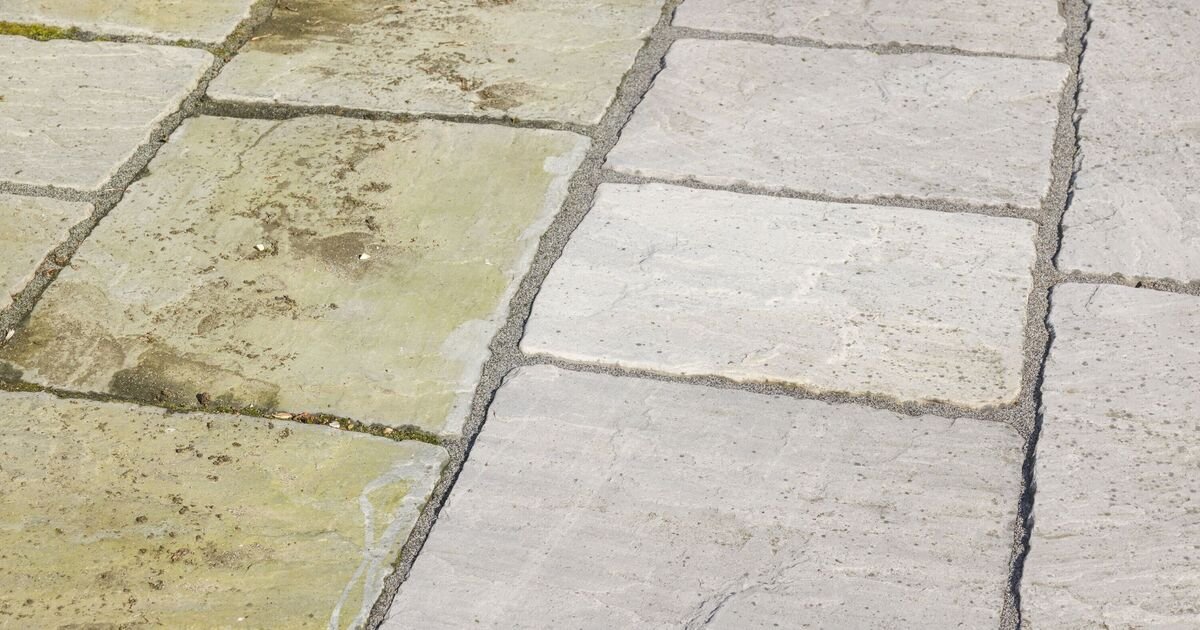

While it may be hot now, recent spells of rain can encourage mould and lichen to grow on patios even if they have already been cleaned after winter. Moss, algae, mould and lichen are just some of the causes of unsightly patio stains, which, if left untreated, can be difficult to remove. Mud, mucky paw prints and even spills after barbecues can also leave an unpleasant mess.
In preparation for summer, most people resort to using pressure washers to clean their patios. However, if you don’t already own one, this can be an expensive investment. Not to mention, pressure washers use a lot of water, which isn’t just wasteful but could hike up your water bill.
Instead, gardeners are being urged to ditch pressure washers for a more natural approach — baking soda and white vinegar.
Laura Harnett, founder of eco cleaning brand Seep, told Express.co.uk: “There is an eco-friendly solution for every cleaning task in the home and garden, including the patio.
“It can be tempting to turn to a pressure washer, but this will waste an awful lot of water, can be expensive to use and could make a soggy garden even wetter.
“Instead, an effective, eco-friendly and low-cost way is to use white vinegar and baking soda.”
How to clean patios using baking soda and white vinegar
Firstly, the patio needs to be swept to remove any debris. It’s also essential to check what the patio is made from, as limestone and concrete patios cannot be cleaned using white vinegar.
If you do have a limestone or concrete patio, simply use baking soda and water instead. For particularly dirty patios, mix baking soda with water to create a thick paste.
For patios that only need a light clean, use a weaker solution consisting of five tablespoons of baking soda in a bucket of water.
Laura continued: “Spread this solution across the patio and leave it for 15 to 20 minutes to allow the baking soda to loosen the grime and mould.
“Then, take a scrubbing brush and work in a circular motion to scrub it off. Rinse the whole area with fresh water and use a sweeping brush to remove any surface water.”
If your patio is not made of limestone or concrete, then white vinegar can be used. White vinegar is particularly effective at removing black spots, which are caused by mould spores.
When using the vinegar, mix a paste using one part baking soda, one part white vinegar and one part hot water.
Scrub the paste into the affected patio areas using circular movements and leave it to sit for 15 to 20 minutes. Rinse the area with fresh water, sweeping off any excess.
Laura added: “If the patio was badly affected with mould, then neat white vinegar can be added to a reusable spray bottle and sprayed over the area, let it dry, and this will prevent the spots from coming back.”
