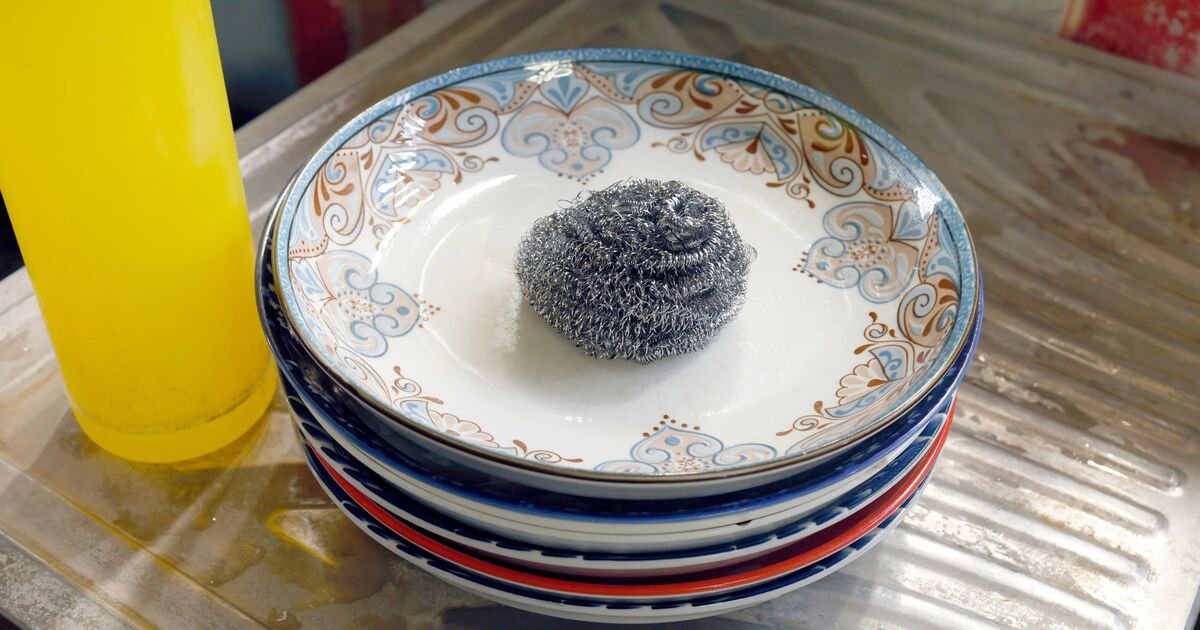


A washing-up scourer should be placed outside in your garden (Image: cgdeaw via Getty Images)
As temperatures drop and outdoor sustenance becomes increasingly scarce, rats instinctively look for warmth and refuge indoors. Yet before they infiltrate homes, gardens are typically the first areas they colonise.
Late summer and early autumn represent critical times for rodent behaviour. Gardens frequently offer convenient access to nourishment, water and protection, rendering them appealing habitats for rats. The encouraging news is that numerous natural methods exist to eliminate rats from gardens and prevent them accessing your property.

A scourer acts as a repellent and stops rats (Image: Yaraslau Saulevich via Getty Images)
One solution recommended by pest control specialists to repel rats is steel wool, though metal scourers typically used for washing up can serve as an alternative.
Specialists at Positive Pest Management observed that scouring pads function to “keep them away”, as they obstruct entry routes to both gardens and homes.
Identifying the indicators of rats promptly provides the greatest opportunity to remove them before they breed or inflict substantial harm
Indicators of rats in gardens
Prior to implementing deterrent measures, it’s sensible to verify that rats are indeed the issue. The initial step involves searching for small openings in the earth measuring approximately five to 10cm in diameter with smooth perimeters.
Burrows are commonly discovered around shed foundations, beneath decking, or alongside walls and fencing and may feature disturbed soil nearby. While rats are known to burrow, they will also construct surface nests, particularly when rearing their young.
These nests are typically fashioned from twigs, leaves, and grass, though they can equally be built using man-made materials such as shredded cardboard, insulation, or paper.
Rat droppings are another telltale sign of these unwanted visitors. Dark brown to black in colour and shaped like a grain of rice, they generally measure around one to 2cm in length and tend to appear in clusters.
They are larger than mouse droppings and darker than those left by squirrels, which makes identification considerably easier. You may also notice gnaw marks on wooden sheds, plastic bin lids, garden tools, plant pots, hoses, and even concrete or brick.

When pets are most active in the UK (Image: Express)
How to use washing-up scourers to deter rats
Once a rat problem has been identified, the next course of action is to tackle it directly, and one highly effective method involves the use of washing-up scourers.
Pest control professionals advise filling entry points to both the garden and home with scouring pads. These locations include gaps in fencing, at the entrance to rat burrows, and between the home’s foundations and the ground.
The experts stated: “By filling the gaps and other rat entry points with scouring pads, rats will have a hard time chewing through the material.
“This is because the material gets stuck in their teeth, making it difficult for them to move or chew.”
Pest specialists at Rentokil also praise scourers as a “great option” that has proven to be “effective in keeping rats away” because they are unable to chew through the tough material.
See more of the stories you love from Daily Express and find us easily in Google by making us a Preferred Source. Free and easy-to-do, just click here to activate or add us as Preferred Source in your Google search settings.
