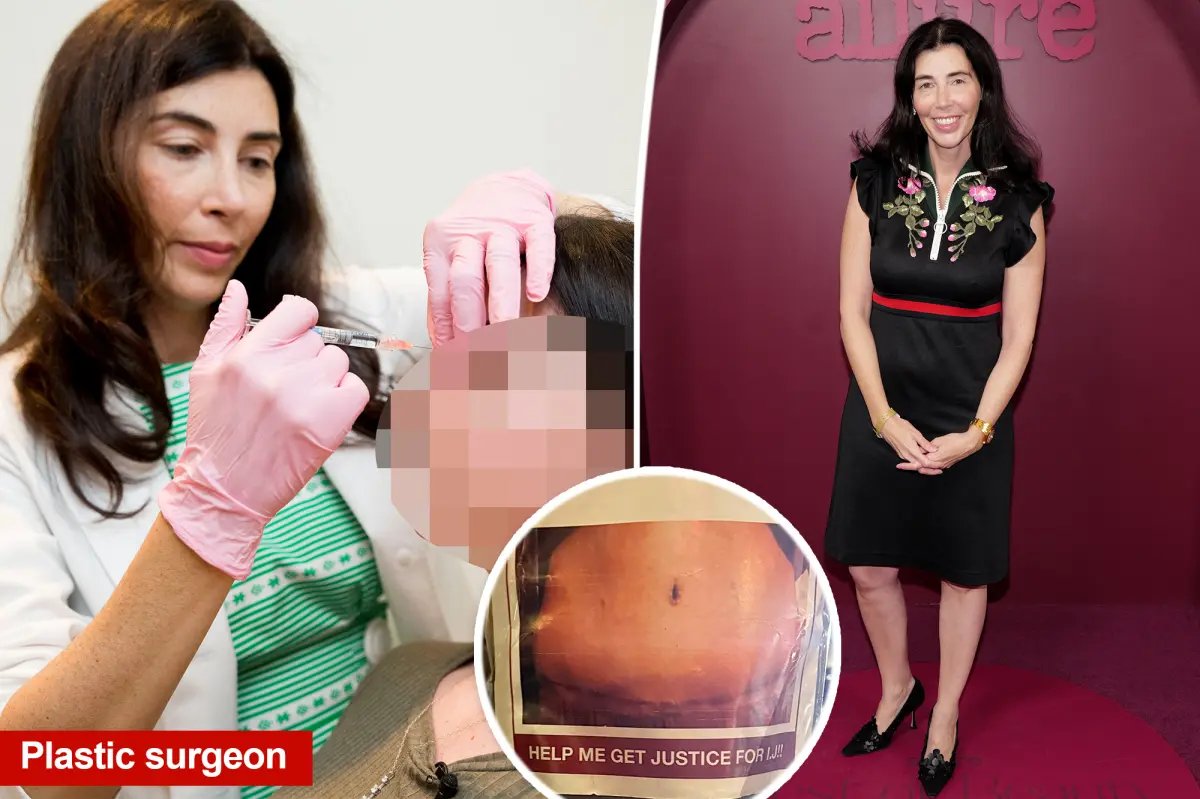


In a city of facelifts, fillers and nip-tucks, few stretches of real estate are as synonymous with cosmetic enhancement as Manhattan’s Park Avenue.
But amid the Upper East Side’s posh plastic surgery practices, one desperate mother is taking her daughter’s grievances to the streets — plastering lampposts with graphic images of a surgical scar and pleas for justice.
Diana Viera, 72, is accusing famed surgeon Dr. Melissa Doft — whose work has been lauded by Vogue and ELLE magazines — of performing an unauthorized tummy tuck on her daughter, Imaya Justice.
She alleges that Justice, now in the middle of a $27 million medical malpractice battle against Doft, agreed to a rhinoplasty, lower eyelid surgery and abdominal liposuction, but not the subsequent tummy tuck and panniculectomy (a procedure involving the removal of excess abdominal skin and fat) — and has now been left permanently disfigured.
“STOP USING OUR FAMILY MEMBERS AS GUINEA PIGS,” reads one of the steamed septuagenarian’s flyers spotted by The Post at East 72nd Street and Park Avenue, just blocks from Doft’s swank suite.
After struggling to find an attorney willing to take on her daughter’s case, Viera said she turned to online forums for advice and representation before taking her campaign to the streets.
“My daughter is suffering, and we have been fighting this PRO SE case alone,” Viera told The Post. “My daughter deserves justice. So do other people in the same boat.”
It’s an unusual sight in a neighborhood where looking good is big business.
Nearly 500 plastic surgery listings populate New York City, according to commercial database InfiniteLeadsHub, with practices peppering the tony stretches of Park and Fifth avenues.
Among them, Doft is something of a star — with her fashion magazine endorsements and her own, namesake luxury skincare line.
Justice tells a less glamorous story, however — alleging the doctor left her permanently disfigured.
According to an amended complaint filed in the Manhattan Supreme Court in June, Justice agreed to undergo a rhinoplasty, lower eyelid surgery and abdominal liposuction with fat grafting to her face in 2021.
Instead, she alleges, Doft also performed an unauthorized tummy tuck and panniculectomy during the June 4 operation at a private surgical facility on Fifth Avenue.
Justice claims she was left with extensive abdominal scarring, a disfigured belly button, chronic pain and breathing difficulties.
She further alleges that her surgical consent form was altered after she signed it to include the word “abdominoplasty.”
Justice is representing herself in the legal battle, which dates back to 2022. Doft’s defense team filed a motion to dismiss the case in September.
Doft’s legal team disputed Justice’s allegations, arguing that medical records, signed consent forms and the surgeon’s notes from the day of the operation contradict her claims that the procedures were unauthorized.
The defense also argued that Justice’s claim of medical battery is outside of New York’s one-year statute of limitations, since the surgery took place in June 2021 and the lawsuit was not filed until November 2022.
Her attorneys also argued that Justice failed to meet a court-ordered deadline for filing her amended complaint and has not provided sufficient medical expert evidence to support her malpractice allegations.
Doft did not respond to The Post’s requests for comment.
A surgical estimate provided to The Post lists the three originally quoted procedures, but a supplemental $600 anesthesia invoice, paid the day after the operation, states that an additional surgical procedure had been added after the original quote was issued.
The documents do not establish whether Justice subsequently consented to the additional surgery.
The parties dispute whether Justice subsequently consented to the additional surgery.
Viera said an additional procedure was briefly discussed during a consultation but maintained that her daughter never agreed to it.
The scope of a patient’s consent can become particularly contentious in cosmetic surgery, where doctors may believe additional tweaks will yield a more aesthetically pleasing result.
“While there’s no reliable data on the frequency of unauthorized procedures, disputes can arise when surgeons operate more extensively than originally agreed upon,” according to Craig Menchin, a former California deputy attorney general and expert in medical licensing cases.
“This is particularly liable to occur in cosmetic cases, as of course there is no ‘right’ result, only the surgeon’s opinion as to what would be most attractive,” Menchin told The Post, speaking generally.
While some surgeons may genuinely believe they’re benefiting their patients, other factors can include poor record-keeping, financial incentives, or professional arrogance, Menchin said.
“They are encouraged to take firm decisions about their patients’ care, and some forget whose patient it is!”
And while surgical consent forms often contain fine print granting doctors some discretion in the operating room, that authority has its limits.
“The broad consent forms most patients sign (‘and any other procedure the surgeon deems necessary’) are meant for real emergencies on the table, not for a second cosmetic procedure the surgeon thought would look better,” New York trial attorney Evan Oshan told The Post, speaking generally.
Meanwhile, Viera has been distributing her flyers, under the banner of Families United Against Plastic Surgeons, hoping to connect with others who allege they’ve experienced similar injuries.
Viera said some of her flyers have already been removed from East 72nd Street and that no one from Doft’s office has contacted her about the campaign.
“We are not lawyers, but we are really trying to get legal justice,” she told The Post.
“I want for my daughter the same things that you would want for your children and other family members.”
