
As temperatures drop and households switch their heating back on, many will be wondering whether it is cheaper to leave the radiators running all day or turn them off when they are not needed. The argument has divided homeowners for years, with some insisting that keeping the heating on at a low temperature throughout the day is more economical. However, Martin Lewis’ Money Saving Expert (MSE) has examined the evidence and reached a conclusion that could help households avoid unnecessary energy costs. Drawing on advice from the Energy Saving Trust, British Gas, an independent plumber and discussions among MoneySavers, MSE said: “Leaving the heating on all day leads to greater heat loss and means higher cost.”
The Energy Saving Trust also advises households to heat their homes only when they need to, rather than keeping the system running constantly. This means switching the heating off when nobody is home can be the more economical option.
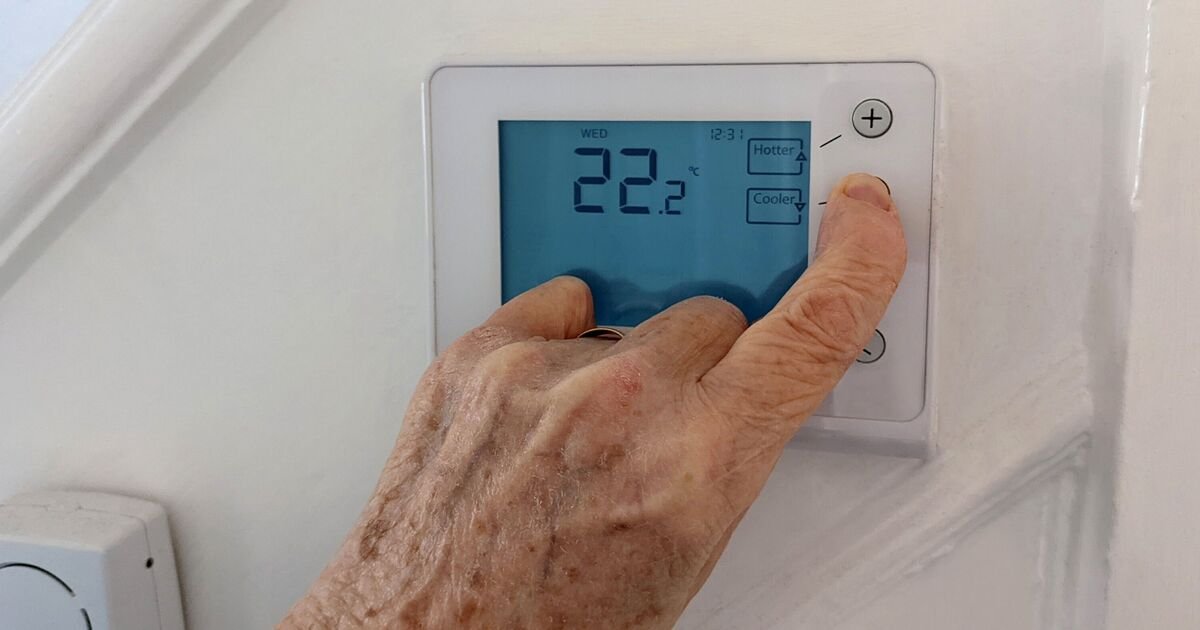
Using a timer and thermostat can help people keep their homes comfortable without wasting energy. A timed thermostat allows households to set the heating to come on shortly before they get up or return home, rather than running throughout the day.
However, the answer is not quite the same for every property. Heating experts at Heat Geek argue that the so-called “low and slow” approach can be more efficient in certain circumstances, particularly for people with modern condensing boilers or heat pumps who spend much of the day at home.
A modern condensing boiler, generally installed since 2005, can recover some of the heat that would otherwise escape. Heat Geek suggests that maintaining a steady indoor temperature of around 18C or 19C may be more economical in suitable homes, rather than repeatedly turning the heating up when the temperature drops.
The approach may also work better in properties with cavity wall and loft insulation or underfloor heating. But it is not necessarily suitable for everyone, particularly people who are regularly away from home or live in properties with plasterboard walls, which can warm up more quickly.
There are also arguments that keeping a home at a steady temperature can help prevent moisture building up inside walls when the heating is repeatedly switched off. Damp and mould can become a concern when moisture accumulates.
With no single approach guaranteed to suit every home, MSE recommends testing both methods and comparing energy use.
Households can take meter readings at the beginning and end of each trial period, then compare how much energy they have used.
It is important to carry out the tests when outside temperatures are as similar as possible, as colder weather can make one period appear more expensive than another.
The Energy Saving Trust’s general advice is that leaving the heating on all day generally costs more because more heat escapes from the property. But the most efficient approach can depend on the heating system, insulation, type of home and how much time people spend indoors.
