
Gardens don’t tend to look their best in November when colourful trees drop their leaves and flowers are scarce. When the leaves start to fall and the season heads into mid to late autumn, it’s a good idea to clear leaves from lawns to keep the grass healthy. A thick blanket of wet leaves blocks vital sunlight and traps moisture, which can weaken the turf and invite lawn diseases.
Just because sludgy dead leaves are a nuisance for proud lawn-owners doesn’t mean that they aren’t beneficial elsewhere in the garden. Instead of cramming these leaves into the garden waste bin, the National Trust suggests keeping them to make leaf mould, which is perfect for feeding next year’s plants.
Simply use your rake or, if you have one, a battery-powered leaf blower to pile the collected leaves into wire cages. You don’t need to do anything else, as the leaves will break down naturally over time.
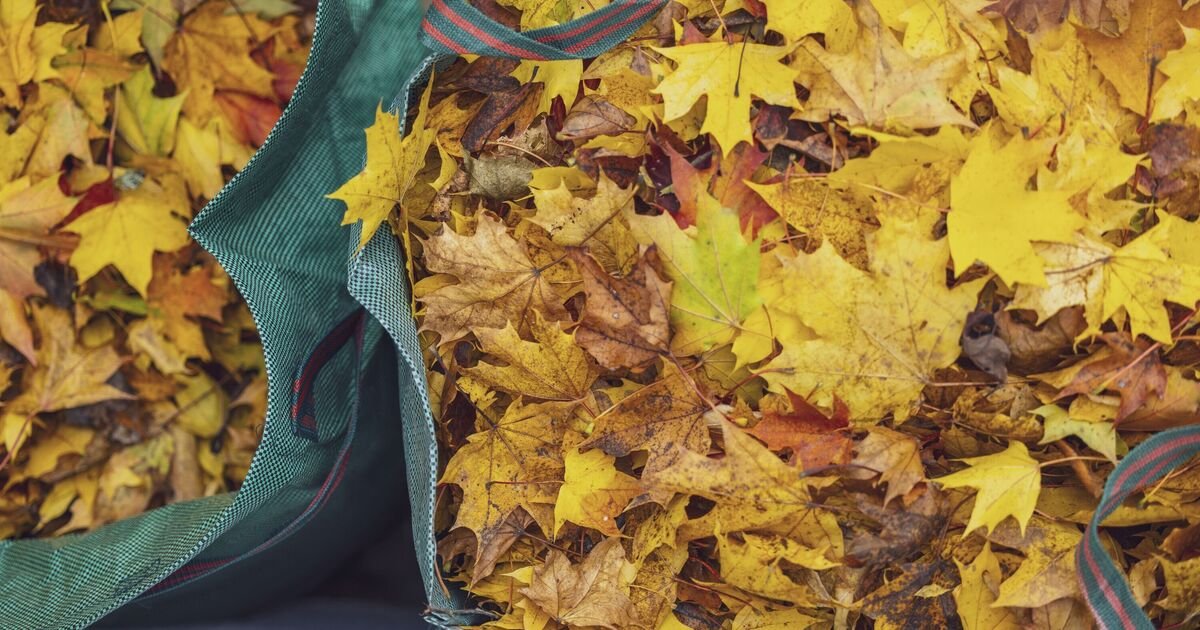
The National Trust said: “If you’re tight on space, use sturdy bags tied at the top and add puncture holes near the base to allow air to circulate.”
This simple storage hack will eventually reward you with a fantastic mulch for your plants the following year.
Gardeners’ World presenter Monty Don goes a step further, urging gardeners to collect “every last” leaf to enrich soil for free. To speed up the rotting process, he advises chopping the leaves up first.
“The easiest way to do this is to mow them which also gathers them up as you do it,” he shared in a November blog post.
Once shredded, he recommends placing the damp leaves in a dedicated chicken-wire bay or a black bin bag punctured with drainage holes.
Because leaves break down mainly through fungal action rather than bacterial action, they must be kept moist. By following this method, the leaves will quietly decompose without any further attention.
You don’t just have to focus on fallen leaves on your lawn, patio or driveway. Check around the base of plant beds for more natural leaf fall.
You do have to be a bit more thorough if you have roses, the National Trust warns.
If your roses had black spot, any fallen leaves removed from their base should go straight into your garden waste collection or dustbin, as the leaves can harbour this disease through winter.
While Monty Don notes that half-decomposed mulch can be used around emerging plants by the following spring, the Royal Horticultural Society points out that most leaves take about two years to fully break down.
Once it reaches this well-rotted stage, the high-quality compost is perfect for seed sowing or blending into potting soil.
Ensure our latest gardening headlines always appear at the top of your Google Search by making us a Preferred Source. Click here to activate or add us as a Preferred Source in your Google search settings
