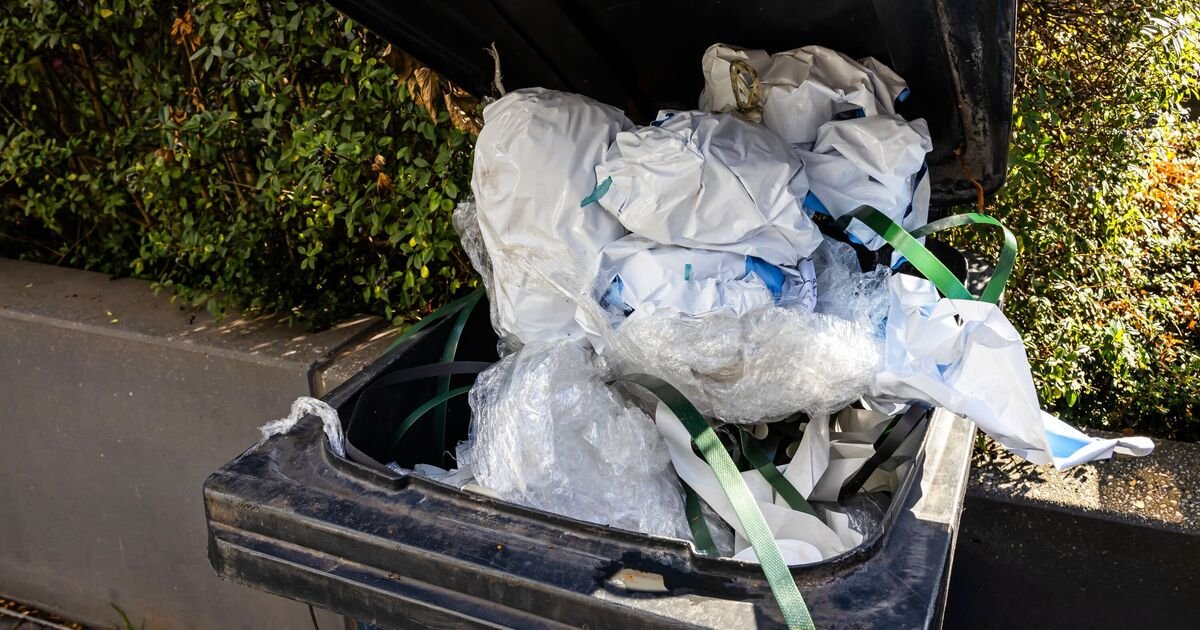

As kerbside collections have become less frequent in recent years, there’s been more potential for neighbourly disputes over wheelie bins. Food waste is usually collected weekly, while most UK councils collect general rubbish fortnightly, so one unauthorised bag from a neighbour can leave a family with overflowing rubbish for weeks.
But before you get too territorial over your bins, you might be surprised to learn who actually owns them. Alex Rooney, partner and acting head of property disputes at Taylor Rose, told Express.co.uk: “Wheelie bins are generally owned by the local council and lent to the household – which is why the council, not you, replaces them when they go walkabout. It also means marking or claiming a bin isn’t quite the same as doing it to your own property, and some councils actively discourage painting house numbers on them for that reason.” However, even if the council owns the bin, that does not mean residents must tolerate neighbours openly dumping household waste in it.
Having someone hijack your wheelie bin is a common grievance, and Manjinder Kaur Atwal, property litigation director at Duncan Lewis, says it can be highly disruptive.
“Having someone put rubbish in your bin without permission can be frustrating, particularly if it leaves you without enough room for your own waste or contaminates your recycling,” she explains, though she notes it is not automatically a criminal offence or an act of fly-tipping simply because someone used it.
So, where does the law actually stand if your neighbour treats your bin like a communal skip? While there is no specific crime of “using someone else’s bin”, both experts point out that depositing unauthorised waste can breach the Environmental Protection Act 1990.
Alex notes that scale matters immensely here: “There is a world of difference between a passer-by dropping a crisp packet into a wheelie bin and someone repeatedly filling a neighbour’s bin with bags of household, building or garden waste.”
Location is also a key factor in these neighbourhood squabbles. If your bin is waiting on the pavement for collection, Manjinder stresses that it still does not become a free-for-all for anyone to use. However, if the bin is kept on your driveway or front garden, Alex points out that “entering another person’s land without permission can amount to trespass”, which gives the homeowner a much firmer civil footing.
What can you do to stop people using your bins?
Both legal experts agree that taking private legal action is rarely the right path: “In most everyday cases, taking a neighbour to court over a bin bag of rubbish is unlikely to be a proportionate response,” Alex warns, with Manjinder agreeing that any legal claim would rely heavily on whether the behaviour is repeated and causes actual financial loss or harm.
Instead, the golden rule for resolving these disputes is to handle them informally first. The experts suggested that homeowners should always start by speaking to the neighbour calmly and explaining the problem before letting the situation escalate into a full-blown feud.
If the diplomatic approach fails and the dumping continues, it is time to start gathering evidence. Manjinder recommends putting your objection in writing to the offending neighbour and making sure to “keep a record of incidents, including photographs where appropriate” to prove that the behaviour is persistent and deliberate.
Your next port of call should be your local authority, which holds the actual enforcement powers for these environmental headaches. You should report the neighbour to the council, particularly if they are leaving larger quantities of waste, dumping hazardous materials, or putting incorrect items into your recycling.
While there is no standalone law specifically banning “bin stuffing”, regularly dumping rubbish into a neighbour’s container can quickly cross into illegal territory. Under UK waste legislation, placing household refuse in someone else’s bin without consent can be classified as an unlawful deposit of waste – treated as a form of fly-tipping.
Local authorities take unauthorised disposal seriously, and offenders can be slapped with fixed penalty notices ranging from £150 up to a hefty £1,000, depending on the severity of the offence and local council policy.
