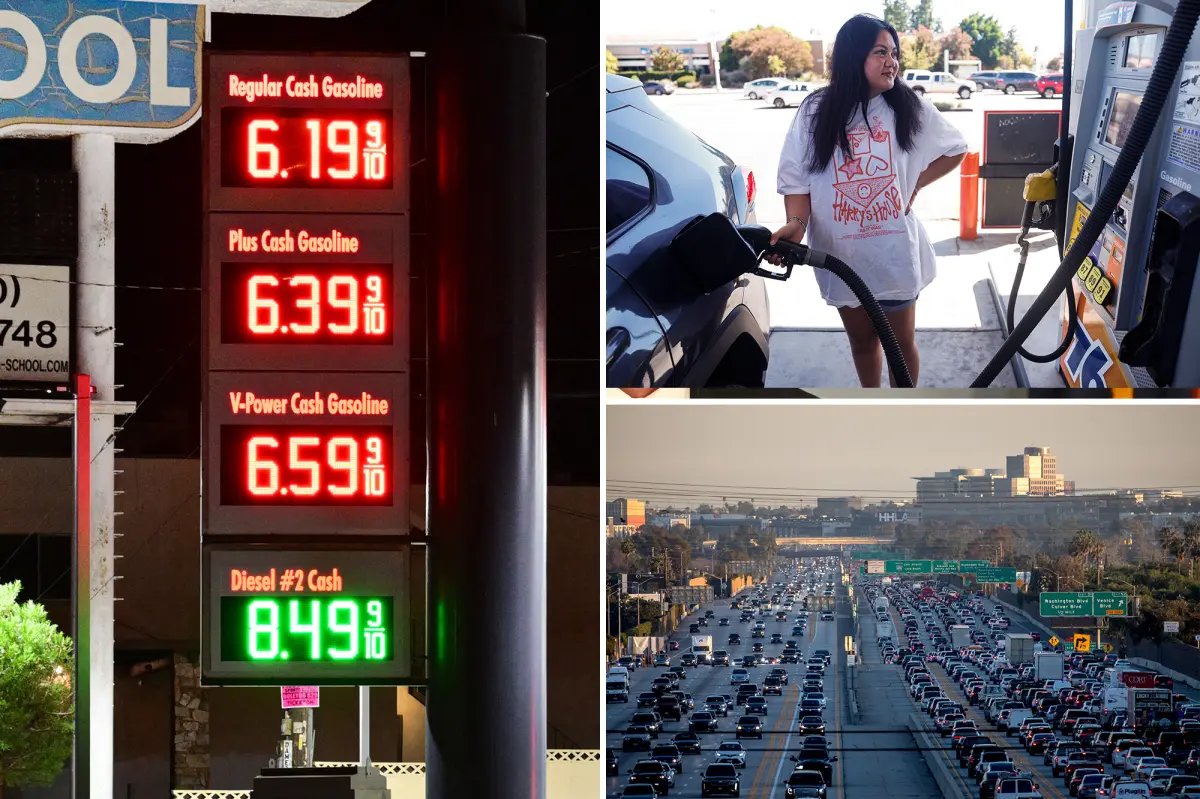


Americans are feeling pain at the pump as oil prices surge past $100 per barrel once again — but just how much varies from coast to coast.
Drivers in New York pay some of the lowest gas tax in the nation at 24.2 cents per gallon, while their West Coast counterparts in California have a whopping 73.6 cents tacked on to every per gallon they buy — the highest in the country.
Liberal Illinois has the second highest gas taxes at 70.4 cents on the gallon, followed by Indiana (63.1 cents per gallon), Washington (60.2 cents per gallon), and Pennsylvania (58.7 cents per gallon), according to the report from the Tax Foundation.
New York ranks in the bottom third.
Alaska has the lowest state gas tax rates, with just 8.9 cents per gallon.
New Jersey adds 49.15 cents per gallon; Connecticut has 25 cents.
But simple gas taxes aren’t the only factor in rising prices.
Environmental programs such as carbon taxes, cap-and-trade systems, and clean fuel standards can all increase retail gas prices because, unlike traditional gas taxes that function as user fees to construct and maintain roads, environmental policies are designed to alter behavior and discourage fuel consumption, according to the report’s authors.
California’s cap-and-trade program is estimated to add about 23 cents per gallon, according to the Legislative Analyst’s Office.
Meanwhile, the Low Carbon Fuel Standard adds between 19 and 52 cents per gallon, as drivers in the Golden State face a total direct and indirect tax and regulatory burden of around $1.16 per gallon, according to official figures.
Certain cities and counties also add substantial local fuel levies on top of state rates, with drivers in particular regions seeing gas prices soar.
Local taxes in Maui, Hawaii add up to 24 cents per gallon, while local indexing levies in Washoe County, Nevada — home of Reno — add a stunning 67.8 cents per gallon — exceeding the state tax rate of almost every other state.
California and other West Coast states are particularly vulnerable to shocks to global gas prices caused by external factors such as the war in Iran, due to lower refining capacity and higher fuel transportation costs, according to the report.
Since the start of the conflict in late February, the global gas supply has tightened, compounding tax burdens in states that calculate gas taxes on a percentage of price basis, such as Indiana.
With more and more drivers now turning to electric vehicles, states facing a decrease in revenue from gas taxes are scrambling to find new sources of revenue.
Most states are now charging electric vehicle drivers an additional fee to account for lost gas tax revenue, with many considering replacing gas taxes entirely with vehicle miles traveled taxes instead.
Taxes filling their tank
- California — 73.64¢
- Illinois — 70.40¢
- Indiana — 63.10¢
- Washington — 60.17¢
- Pennsylvania — 58.70¢
- Michigan — 53.40¢
- New Jersey — 49.15¢
- Maryland — 46.81¢
- Virginia — 42.40¢
- North Carolina — 41.25¢
- Rhode Island — 41.12¢
- Florida — 40.10¢
- Oregon — 40.00¢
- Ohio — 38.50¢
- West Virginia — 35.70¢
- District of Columbia — 35.70¢
- Vermont — 34.88¢
- Georgia — 34.05¢
- Montana — 33.75¢
- Idaho — 33.00¢
- Wisconsin — 32.90¢
- Minnesota — 32.70¢
- Nebraska — 32.70¢
- Utah — 32.55¢
- Maine — 31.45¢
- Alabama — 31.00¢
- Colorado — 30.18¢
- Iowa — 30.00¢
- South Dakota — 30.00¢
- Missouri — 29.99¢
- South Carolina — 28.75¢
- Massachusetts — 27.56¢
- Tennessee — 27.40¢
- Kentucky — 26.40¢
- Kansas — 25.03¢
- Arkansas — 25.00¢
- Connecticut — 25.00¢
- Nevada — 24.81¢
- Mississippi — 24.40¢
- New York — 24.18¢
- Wyoming — 24.00¢
- New Hampshire — 23.75¢
- North Dakota — 23.03¢
- Delaware — 23.00¢
- Louisiana — 20.93¢
- Oklahoma — 20.00¢
- Texas — 20.00¢
- Arizona — 19.00¢
- New Mexico — 18.88¢
- Hawaii — 18.50¢
- Alaska — 8.95¢
