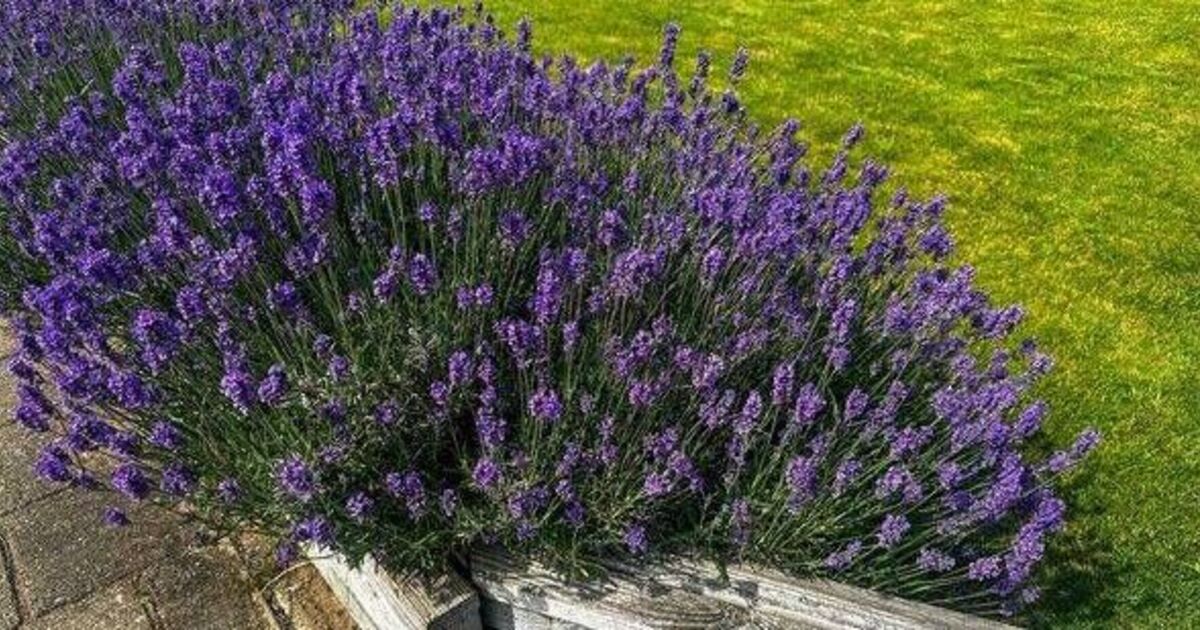

Unlike many other plants such as hydrangeas and roses, lavender generally doesn’t require fertilising. In fact, less is more with this beautiful herb.
Overfeeding can simply encourage leafy growth at the expense of flowers. If too much nitrogen – a nutrient – enters the soil, it can hinder flower production and instead promote the growth of numerous soft green stems that aren’t as attractive. Annette Thurmon, a homesteader and founder of Azure Farm Life, has revealed that the best way gardeners can help their lavender to bloom is by providing it with sand or gravel mulch.
She explained: “If your soil is too fertile, you may have fewer blooms. You can either move your plants or add sand or gravel to aerate and reduce nutrient density.”
Lavender naturally thrives in rocky, dry environments, so adding gravel or sand mulch replicates its natural habitat and can aid its growth.
Mulching is a simple gardening technique that involves covering a plant’s topsoil with organic matter, which helps to enrich the soil, reports the Express.
Mulch made from sand or gravel reflects sunlight back onto the plant, maintaining soil warmth and encouraging the plant to concentrate more on producing flowers rather than leafy stem growth.
It’s surprisingly easy to overwater lavender, a common blunder made by many when growing this plant. However, using gravel or sand mulch can enhance soil drainage.
If lavender is waterlogged for prolonged periods, its root system may become saturated, weakened, or even succumb to disease.
Mulching, on the other hand, aids in maintaining healthy roots, which subsequently promotes better blooming.
When purchasing this type of mulch, opt for builder’s sand or pea gravel, as these provide excellent air circulation.
Avoid mulches like fine sand, which tend to clump together and obstruct water from reaching the roots.
When applying it, make sure you distribute the gravel or sand mulch around the base of the lavender, leaving a gap near the stem to stop water from accumulating there.
Annette advised: “Apply a thin layer of mulch around the base of the lavender plants to help retain moisture, suppress weeds, and regulate soil temperature.”
Ensure that water can drain through the soil quickly without forming a puddle, and your lavender’s surrounding soil will be ready for the rest of this flowering season.
