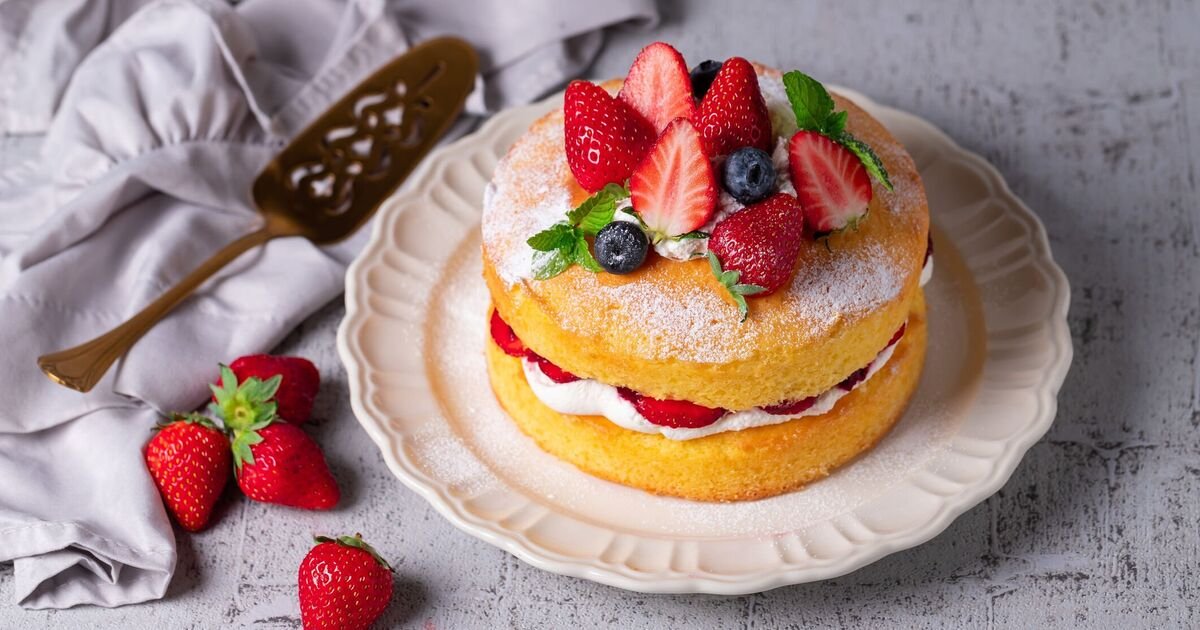

If you’re searching for the secret to a truly light and airy Victoria sponge, Nigella Lawson’s method may be exactly what you need. This classic British cake gets an even lighter texture thanks to one clever trick from the renowned baker that produces a beautifully soft crumb every time. Her use of cornflour alongside plain flour, plus the option to blitz the batter in a food processor with precision, creates a sponge that’s airy and incredibly delicate.
Sharing the recipe on her official website, Nigella said: “My version tinkers only a little with the traditional model: I use a mixture of flour and cornflour/cornstarch in the sponge, which creates cakes that are exceptionally light and tender; and I add some fruit along with the jam.” When prepared as per the food author’s instructions, this recipe yields eight to 10 servings.
Method
Preheat your oven to 180C (160C for fan ovens). Lightly butter the sides of two cake tins and place a piece of baking parchment at the bottom of each to prevent sticking.
For the sponge, you can use a food processor: combine all the ingredients (excluding the milk and the two teaspoons of sugar) along with an extra half a teaspoon of baking powder. Blend until smooth. With the machine running, slowly pour in two tablespoons of milk through the funnel. If the batter isn’t soft and falls easily from a spoon, add a third tablespoon.
Alternatively, if using a hand mixer or mixing by hand, start by beating the butter and sugar together until extremely light and fluffy. Add the vanilla extract and mix well.
In a separate bowl, sift together the flour, cornflour, baking powder, and salt.
Add one egg to the creamed mixture, then immediately follow with a tablespoon of the flour mixture. Once both are fully incorporated, repeat the process until all four eggs and a portion of the flour mix are used. Scrape down the sides of the bowl, then gradually blend in the remaining dry ingredients.
Carefully stir in the milk, adding one tablespoon at a time until the batter reaches a consistency that drops easily from a spoon. You should not need more than three tablespoons in total.
Divide the batter evenly between the prepared tins, smoothing out the tops. Bake them on the same oven shelf for 20 to 25 minutes, or until the cakes are a rich golden brown, spring back lightly when touched, and a skewer inserted into the centre comes out clean.
Let the cakes cool in their tins on a wire rack for 10 minutes. Then turn them out, peel off the parchment, and return them to the rack. Choose which cake will be the top layer – for this type of cake, pick the one that looks more attractive. Place that layer top-side up. The other layer should cool with its top facing down to help flatten any domed surface. Leave both layers to cool completely. If needed, the cakes can rest on the rack under a clean tea towel for a couple of hours before assembling.
When it’s time to assemble, place the bottom cake layer on your serving dish with its flat side facing up. Loosen the jam by stirring it in a small bowl, then spread it evenly over the cake.
Gently mash the raspberries with a fork, then distribute them evenly over the jam layer.
Whip the cream until thick but still soft enough to spread easily. Carefully spread the cream over the fruit. Place the second cake layer on top and dust with the two teaspoons of sugar for a polished finish.
